SAV Products – VARUN®

Pooja Product

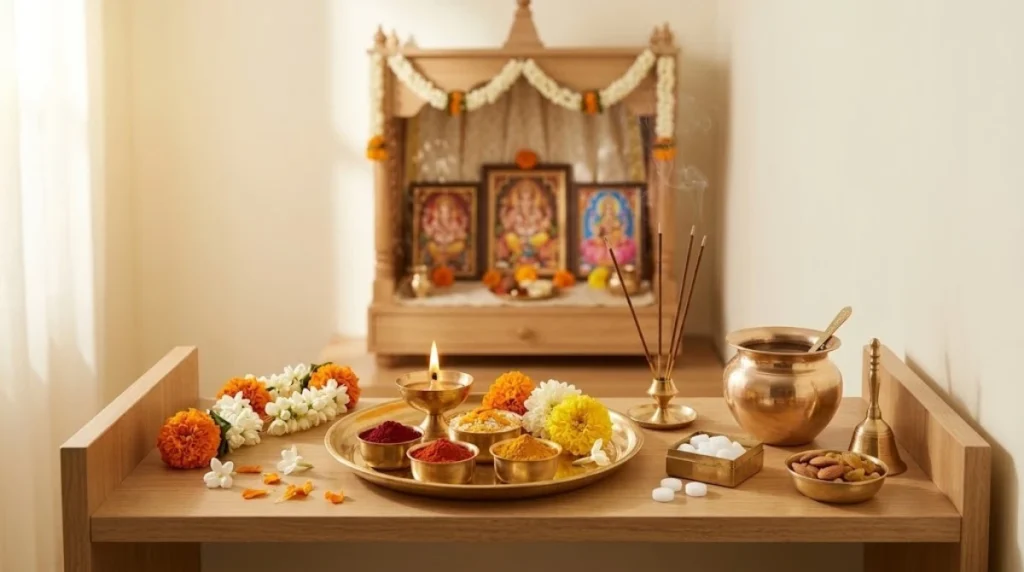
Daily puja samagri list for home with diya, ghee, cotton wick, kumkum, dhoop, flowers and puja thali

Daily Puja Samagri List for Home: सुबह और शाम की पूजा के लिए संपूर्ण सामग्री

Daily Puja Samagri List for Home: सुबह और शाम की पूजा के लिए संपूर्ण सामग्री A daily puja at home can be performed with a simple set of commonly used items such as a diya, puja ghee or oil, cotton wick, flowers, water, kumkum or roli, dhoop or agarbatti, and naivedya. Many families also keep chandan, akshat, kapoor, a bell, and a small puja thali ready for morning worship and evening aarti. There is no single universal daily puja samagri list that applies to every Hindu household. Puja practices vary by deity, region, family tradition, sampradaya, and personal devotion. Some families follow a very simple routine, while others use a more detailed set of puja items. This guide provides a practical puja samagri list for home, explains commonly used daily worship items, shows what to keep in a puja thali, and gives simple tips for morning puja, evening aarti, storage, safety, and beginner-friendly preparation. Note: This article is a general household preparation guide. For deity-specific puja, vrat, festival puja, or detailed rituals, follow your family tradition or consult a knowledgeable priest. Daily Puja Samagri List at a Glance If you want a quick checklist, start with the table below. These are commonly used items for daily home worship, but not every household needs every item every day. Puja Item Common Use Typical Role Diya / Deepak Lighting during puja and aarti Common daily item Puja Ghee or Puja Oil Used for lighting diya Common daily item Cotton Wick / Batti Used inside diya Common daily item Kumkum / Roli Tilak and puja use Common in many homes Akshat / Rice Offering during puja Useful / tradition-specific Chandan Tilak and devotional use Useful / tradition-specific Dhoop / Agarbatti Fragrance and devotional atmosphere Common in many homes Kapoor / Camphor Aarti, especially in some evening puja traditions Tradition-specific Flowers Offering to deity Common in many homes Water / Jal Offering and purification Common daily item Gangajal Traditionally used in many homes Tradition-specific Naivedya Food offering presented during puja Common in many homes Prasad Offering received or shared after puja Common in many homes Puja Thali Arranging puja items Useful Bell / Ghanti Used during aarti Tradition-specific Mauli Dhaga Used in sankalp or special puja Ritual-specific Kalash Used in detailed rituals and festivals Special occasion Havan Samagri Used for havan Special occasion For daily worship, you do not need to buy every item used in Hindu rituals. A simple home puja can be performed with a clean space, sincere devotion, and the items your household actually uses. Commonly Used Puja Items for Daily Worship Daily puja becomes easier when regularly used items are kept clean and organized near the home mandir. The following items are commonly used in everyday worship. Diya / Deepak A diya, or deepak, is one of the most common items used in daily puja. It is typically lit during morning worship, evening aarti, and special religious occasions. Families commonly use brass, clay, or small metal diyas. For everyday use, choose one that is stable, easy to clean, and suitable for the size of your mandir. For safety, place the diya on a stable, heat-resistant surface. Keep it away from curtains, paper, plastic, loose cloth, children, and pets. Never leave a burning diya unattended. Puja Ghee or Puja Oil Puja ghee and puja oil are commonly used to light the diya. Some families prefer ghee, while others regularly use oil, especially for evening worship or longer diya lighting. There is no need to treat one option as universally correct. The choice usually depends on household tradition, availability, and the type of puja being performed. If you light a diya every day, keep a small regular-use container near the mandir and store the main bottle separately in a clean, safe place. Follow the storage instructions on the product label where provided. Important: If a product is sold only for diya or ritual use, do not use it as a food offering or ingredient unless the packaging clearly states that it is suitable for human consumption. Cotton Wick / Batti A cotton wick, or batti, is placed inside the diya and absorbs the ghee or oil used for lighting. Because cotton can absorb moisture easily, keep the wicks clean and dry. If you buy them in larger quantities, store them in a sealed container or clean packet away from water, oil, and dust. Kumkum / Roli Kumkum or roli is commonly used for tilak and other puja offerings. In many households, it is applied to the deity, puja items, or family members after worship. Store kumkum in a small covered container and keep it away from water and oil so it remains dry and easy to use. Akshat / Rice Akshat generally refers to unbroken rice grains used during puja. Many households use akshat along with roli or kumkum as part of daily worship. It is helpful to keep a small quantity of clean rice reserved exclusively for puja. Once rice has been kept for ritual use, avoid mixing it back with regular kitchen rice. Chandan Chandan, or sandalwood powder or paste, is used for tilak and devotional offerings in many Hindu households. If you use sandalwood powder, store it in a dry container. If you prepare chandan paste, make only as much as you need for the puja. Dhoop / Agarbatti Dhoop and agarbatti are commonly used during morning and evening puja to create a devotional atmosphere. Always place them in a proper holder and keep them away from curtains, paper, plastic, children, and anything that could catch fire. Use them in a reasonably ventilated space, especially in small rooms or around people sensitive to smoke. Kapoor / Camphor Kapoor is used during aarti in many homes, particularly during evening worship or on special occasions. Camphor gradually sublimes when exposed to air, which means it can slowly disappear from an open container. Store it in a tightly closed container and keep it away from heat, flame, and children. When burning

Daily Puja Samagri List for Home: सुबह और शाम की पूजा के लिए संपूर्ण सामग्री Read More »
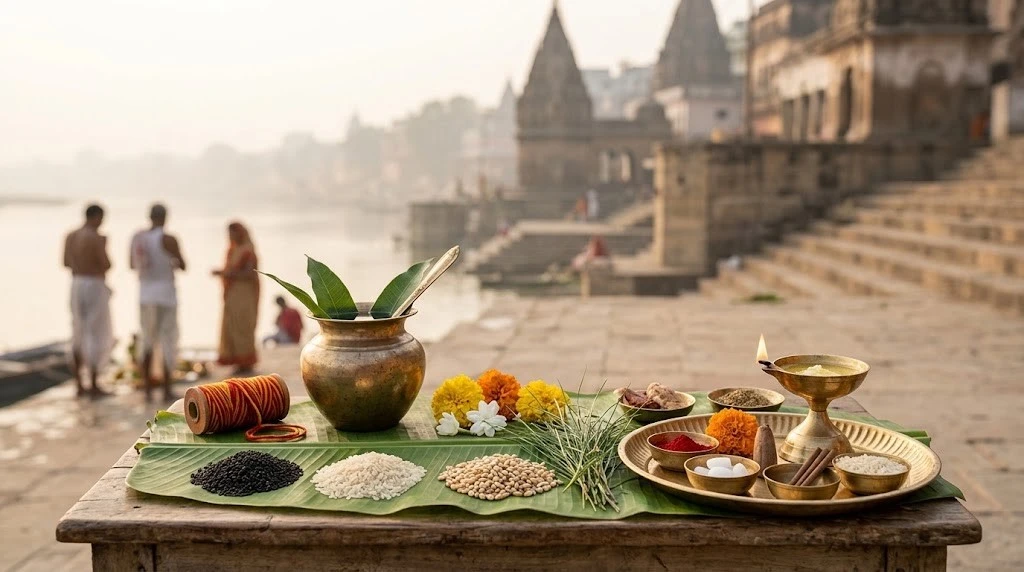
Pitru Paksha Puja Samagri in Gaya for Pind Daan and Tarpan

Pitru Paksha Puja Samagri in Gaya: Complete Pind Daan & Tarpan Items List

Pitru Paksha Puja Samagri in Gaya: Complete Pind Daan & Tarpan Items List Gaya Ji is one of the most important pilgrimage destinations in India for Pind Daan, Tarpan and Shraddh rituals. During Pitru Paksha, thousands of devotees visit the city to offer prayers for their departed ancestors at sacred places such as the Falgu River, Vishnupad Temple, Akshayavat and traditional Pind Daan vedis. For families travelling from outside Bihar, especially first-time visitors, one of the most common concerns is knowing what puja samagri to carry, which items are needed for Tarpan, and what can be arranged locally in Gaya Ji. A clear Pitru Paksha Puja Samagri in Gaya checklist can make preparation easier and help avoid unnecessary stress on the day of the ritual. This guide explains the commonly used puja items for Pind Daan, Tarpan and Shraddh, along with practical tips for carrying, organizing and buying puja samagri during Pitru Paksha in Gaya. At SAV Products, we understand the importance of purity, faith and tradition in every puja. Through VARUN® Pooja Products, we offer essential puja items for daily worship, festivals and religious rituals. Important Note: Pind Daan and Shraddh rituals may vary by family tradition, region, gotra and priestly guidance. Always confirm the final samagri list and ritual method with your Pandaji or family priest before the ceremony. What Is Pitru Paksha? Pitru Paksha is a sacred period in Hindu tradition dedicated to remembering and honoring departed ancestors. During this period, devotees perform rituals such as Shraddh, Tarpan and Pind Daan with faith, gratitude and respect. Shraddh is performed as an act of remembrance and reverence for departed family members. Tarpan generally involves offering water, til and other sacred items while remembering one’s ancestors. Pind Daan involves offering pind, traditionally prepared from rice, barley flour, black sesame and other ritual materials as instructed by the priest. In Gaya Ji, Pitru Paksha holds special importance because the city has long been associated with ancestral rituals. Many devotees believe that performing Pind Daan in Gaya brings spiritual peace to departed souls and fulfills an important family duty. Since the exact method may vary by family tradition, region and priestly guidance, devotees should always confirm the final ritual procedure and samagri list with their Pandaji. Why Is Gaya Ji Important for Pind Daan? Gaya Ji is one of the most respected pilgrimage centers in India for Pind Daan. Devotees from Bihar, Jharkhand, Uttar Pradesh, West Bengal, Maharashtra, Gujarat, Rajasthan, Delhi and many other states visit Gaya during Pitru Paksha. The city is spiritually connected with sacred places such as Falgu River, Vishnupad Temple, Akshayavat and several traditional vedis. The Falgu River is closely associated with Tarpan rituals, while Vishnupad Temple is an important center for prayers and ancestral offerings. Because large numbers of pilgrims arrive during Pitru Paksha, the availability of puja samagri becomes especially important. Although many items can be purchased locally, carrying essential items in advance can make the process smoother, particularly for families travelling with elderly members. Pitru Paksha Mela Gaya 2026 Date According to the official Gaya Pinddaan portal, Pitrapaksha Mela 2026 in Gaya Ji is scheduled from 26 September 2026 to 10 October 2026. Devotees planning to visit Gaya during this period should prepare their puja samagri, travel arrangements and local plans well in advance. Event Date Pitrapaksha Mela Gaya 2026 Starts 26 September 2026 Pitrapaksha Mela Gaya 2026 Ends 10 October 2026 Sarva Pitru Amavasya 2026 10 October 2026 Place Gaya Ji, Bihar For official mela-related information, pilgrims can also check the Pinddaan Gaya Ji official portal. During the mela, Gaya experiences heavy pilgrim traffic. It is therefore wise to confirm your ritual date, speak with your Pandaji, arrange accommodation and prepare essential puja items before travelling. Complete Pitru Paksha Puja Samagri List for Gaya Pind Daan The exact puja samagri may vary depending on family tradition, Pandaji guidance and the place where the ritual is performed. However, the following checklist covers commonly used items for Pind Daan, Tarpan and Shraddh-related rituals in Gaya Ji. Basic Puja Samagri Puja Item Use in Ritual Puja Thali To arrange puja items Kumkum Tilak and puja use Roli / Sindoor Traditional ritual use Akshat / Rice Offering during puja Flowers Offering to deities and ancestors Betel Leaves Traditional puja offering Betel Nut / Supari Puja and sankalp use Mauli Dhaga / Kalawa Tying during ritual or sankalp Dhoop Fragrance and devotional atmosphere Camphor / Kapoor Aarti and purification Puja Ghee Diya, aarti and ritual use Puja Oil Lighting diya Cotton Wicks Lighting diya Diya Deep daan and aarti Gangajal / Clean Water Purification and ritual offering Tarpan Samagri Item Purpose Black Sesame / Til Commonly used in Tarpan Water Main offering during Tarpan Kusha Grass Traditionally used in ancestral rituals Brass / Copper Lota For water offering Puja Asan Sitting during ritual White Cloth Often used in Shraddh-related rituals Tarpan is usually performed with water and til while remembering the departed ancestors. The exact mantras, direction, posture and process should be followed as guided by the priest. Pind Daan Samagri Item Purpose Rice Flour / Cooked Rice Used for preparing pind Barley Flour Traditional offering item Black Sesame Used in pind and Tarpan Honey Used in ritual preparation Ghee Used in sacred offerings Banana Leaves / Pattal For placing offerings Flowers Ritual offering Dhoop and Kapoor Puja and aarti Clean Cloth Used as per ritual requirement Dakshina Offered according to tradition Before finalizing your list, speak with your Pandaji or priest. Some rituals may require additional materials, while others may use a simpler set of items depending on family tradition and the selected ritual location. VARUN® Products Useful for Pitru Paksha Puja For sacred rituals, clean and reliable puja items are important. VARUN® Pooja Products offers daily and festival-use essentials suitable for home worship, temple use and religious occasions. VARUN® Product Use During Puja VARUN® Puja Ghee Diya, aarti and ritual use VARUN® Puja Oil Lighting diya VARUN® Organic Humad Dhoop Fragrance and devotional atmosphere VARUN®

Pitru Paksha Puja Samagri in Gaya: Complete Pind Daan & Tarpan Items List Read More »

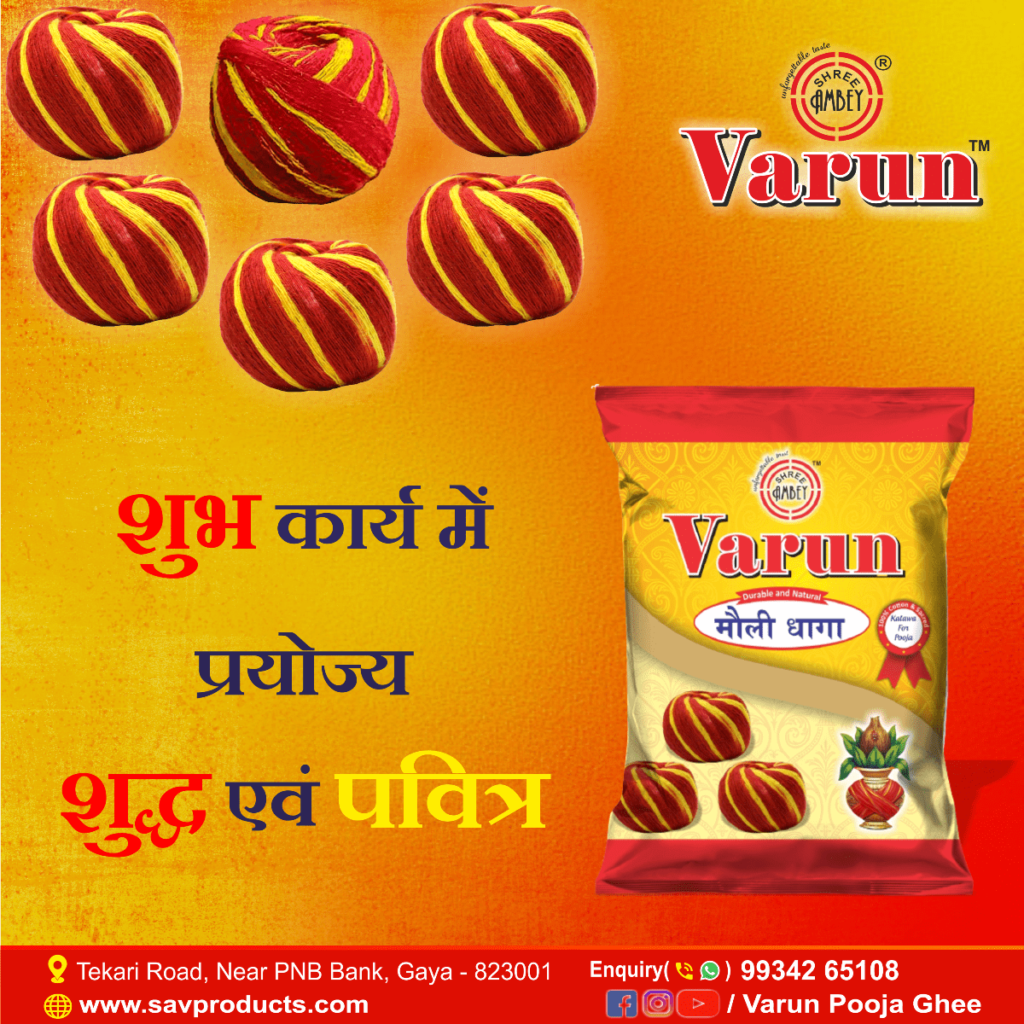
varun mauli dhaga - kalawa

Mauli Dhaga-Kalawa

What are uses of Mauli Dhaga in Hindu festival? Mauli Dhaga, also known as Kalava or Mouli, is a sacred thread used in Hindu festivals and rituals. Here are some of its uses in Hindu festivals: Overall, Mauli Dhaga is considered a symbol of faith and devotion in Hinduism and is used in various festivals and rituals to seek the blessings of the deities and to protect oneself from negative energies.

Mauli Dhaga-Kalawa Read More »

Scroll to Top
Enable Notifications OK No thanks