SAV Products – VARUN®

October 2026

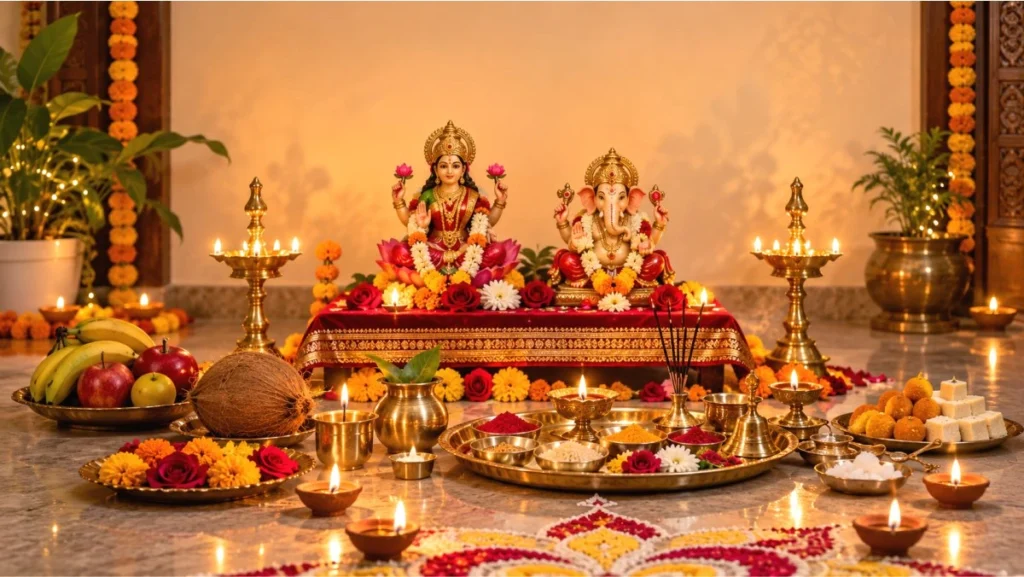
Diwali Puja Samagri List with Lakshmi Ganesh, diya, ghee, flowers and puja thali

Diwali Puja Samagri List: Complete Lakshmi Ganesh Puja Checklist

Diwali Puja Samagri List: Complete Lakshmi Ganesh Puja Checklist Preparing for Diwali Lakshmi-Ganesh Puja becomes much easier when the puja samagri is arranged before worship begins. Commonly used items include diyas, cotton wicks, puja ghee or oil, kumkum or roli, akshat, flowers, dhoop, kapoor, water, fruits, sweets and other food offerings. There is no single universal Diwali Puja Samagri List followed by every Hindu household. Practices vary by family, region, sampradaya and local custom. Some families prepare a kalash and include specific leaves or coins, while others follow a much simpler Lakshmi-Ganesh Puja setup. Use this guide as a practical preparation checklist rather than a fixed religious rule. If your family follows an established Diwali Puja method, that tradition should guide your final samagri list. Terminology note: Bhog or naivedya refers to food presented as an offering during puja. After it has been offered, it may be received or shared as prasad according to tradition. Hindu puja guidance distinguishes naivedya from prasadam in this way. Hindu American Foundation Diwali Puja Samagri List at a Glance The table below gives a quick overview of commonly used Lakshmi Ganesh Puja Samagri. Category Commonly Used Items Lakshmi-Ganesh setup Lakshmi and Ganesh murti/photo, chowki, clean cloth Kalash, if followed in your tradition Kalash, water, coconut, leaves according to tradition, mauli Tilak and puja items Kumkum/roli, haldi, chandan, akshat Diya Diyas, puja ghee or oil, cotton wicks Fragrance and aarti Dhoop, agarbatti, kapoor, aarti thali, bell Flowers Fresh flowers, garland Bhog / Naivedya Fruits, sweets and family-traditional food offerings Business or trading tradition Coins, account books, pen or cash box where customary Other useful items Paan/supari where used, matchbox/lighter A simple household puja may use only part of this list. The purpose is to help you prepare, not to suggest that every item is compulsory. What Is Diwali Puja? Diwali includes a range of religious and regional observances across India. Lakshmi Puja is one of its prominent traditions, and Lord Ganesha is also widely associated with Diwali festivities. India’s official tourism portal describes Lakshmi as associated with prosperity and fortune and Ganesha with wisdom and the removal of obstacles. Incredible India In many households, Maa Lakshmi and Shri Ganesha are worshipped together during the main Diwali evening puja. The exact form of worship can vary considerably. Some households include a kalash, account books, coins, additional deities or region-specific offerings. Others perform a simpler home puja using diya, flowers, tilak materials and naivedya. Why Are Lakshmi and Ganesh Worshipped During Diwali? A common traditional explanation connects Maa Lakshmi with prosperity and Shri Ganesha with wisdom, auspicious beginnings and the removal of obstacles. Hindu American Foundation material also documents traditions in which Lakshmi and Ganesha are welcomed together during Diwali, while noting the festival’s wide regional diversity. Hindu American Foundation This should be understood as a common traditional explanation, not as the only theological interpretation followed by every Hindu community. Diwali 2026 Date For 2026, Diwali falls on Sunday, November 8, 2026. India’s Ministry of Tourism lists Diwali on that date. Incredible India Festival Date Diwali / Lakshmi Puja 2026 Sunday, November 8, 2026 What Time Is Lakshmi Puja in 2026? The exact Lakshmi Puja Muhurat is location-dependent. It should not be presented as one universal India-wide time. For example, Panchang calculations for Delhi, Pune, Chennai, Jaipur, Hyderabad and other cities show different Lakshmi Puja timings for the same date. Drik Panchang If timing is important for your household, check an authoritative Panchang for your specific city before the puja. Because this article uses an evergreen URL, the date section should be reviewed and updated each year without creating a new year-specific page. Complete Lakshmi Ganesh Puja Samagri Checklist Instead of using one overwhelming 40- or 50-item list, it is more practical to organize Diwali Puja Samagri by purpose. 1. Lakshmi-Ganesh Murti and Puja Setup A common home setup may include: You do not necessarily need new murtis, thalis or cloth every year. Reusable items from your home mandir can be cleaned and prepared before Diwali. 2. Kalash Samagri If your family includes kalash sthapana in Diwali Puja, commonly used materials may include: Kalash arrangements vary considerably, so this should be treated as a tradition-specific section rather than a compulsory Diwali kit. If you are unsure, follow your household method or consult a knowledgeable priest. 3. Diya, Puja Ghee, Oil and Cotton Wicks Diyas are among the most recognizable parts of Diwali worship and decoration. Keep ready: Different families use ghee, particular oils or both. Follow the practice traditionally used in your household rather than treating one option as universally mandatory. 4. Kumkum, Roli, Haldi, Akshat and Chandan Common tilak and puja materials may include: These can be placed in small covered containers inside or beside the puja thali. Their use varies between traditions. One household may use several of them, while another may use only a few. 5. Dhoop, Agarbatti and Kapoor Many families use dhoop, agarbatti or kapoor during Diwali Puja and aarti. You may keep: Use burning products only in suitable holders and keep them away from curtains, paper decorations, loose clothing and children. 6. Flowers and Puja-Space Decoration Items Fresh flowers are commonly used for offering and decorating the worship area. You may prepare: Optional puja-space decoration items may include: These are useful for preparing the Diwali space but should not be confused with universally required ritual samagri. Flowers and decoration styles vary according to region, availability and family custom. 7. Bhog / Naivedya Items Bhog or naivedya refers to food presented during worship. Once offered, it may be received or distributed as prasad. Hindu American Foundation Depending on household tradition, Diwali naivedya may include: There is no need to copy a very long food list if your family traditionally offers only a few items. Choose clean, fresh offerings that are suitable for your household tradition. 8. Coins, Bahi-Khata and Business Puja Items Some business and trading communities observe Diwali with Chopda Puja, bahi-khata puja or related account-book traditions. This practice is

Diwali Puja Samagri List: Complete Lakshmi Ganesh Puja Checklist Read More »
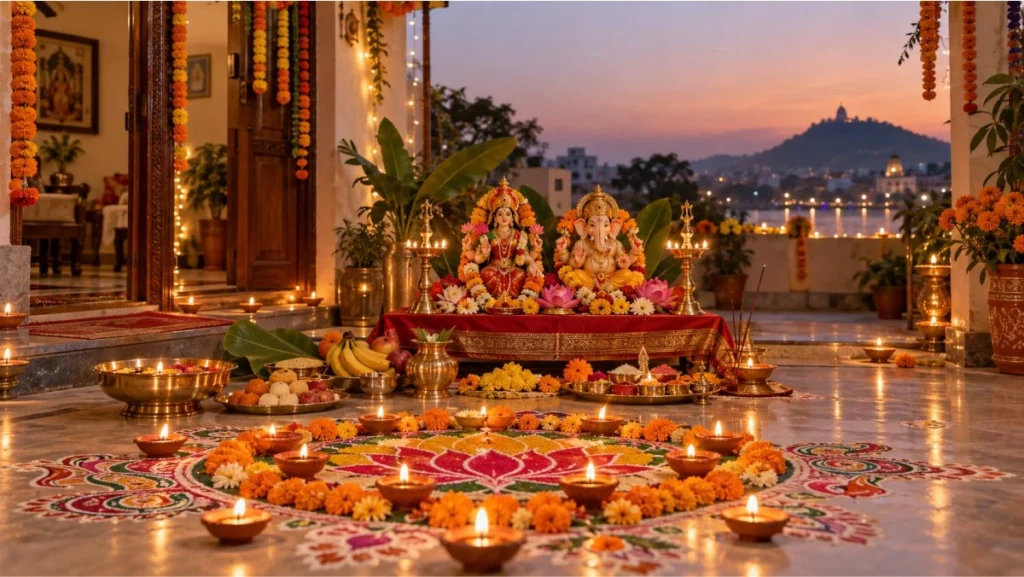
Diwali 2026 date and Lakshmi Puja in Gaya Bihar with diyas and rangoli

Diwali 2026: Date, Lakshmi Puja Time & Festival Guide

Diwali 2026: Date, Lakshmi Puja Time & Festival Guide Diwali 2026 falls on Sunday, November 8, 2026. For Gaya, Bihar, the Lakshmi Puja Muhurat is 5:30 PM to 7:27 PM, with Pradosh Kaal from 5:06 PM to 7:41 PM. Amavasya Tithi begins at 11:27 AM on November 8 and ends at 12:31 PM on November 9. These Gaya-specific timings are listed by Drik Panchang. Drik Panchang India’s Ministry of Tourism also lists Diwali on Sunday, November 8, 2026 in its national festival calendar. Incredible India Diwali, also known as Deepavali, is celebrated through a wide range of Hindu traditions. Depending on region and family custom, observances may include Lakshmi-Ganesh Puja, lighting diyas, rangoli, sweets, family gatherings, business worship and other local practices. This guide covers the Diwali 2026 date, Gaya-specific Lakshmi Puja timing, Amavasya Tithi, important Diwali-period dates for Bihar, the meaning of the festival, common traditions and practical preparation. Important: Lakshmi Puja timings are location-specific. Readers outside Gaya should check a Panchang calculated for their own city before performing time-sensitive rituals. Diwali 2026 Date and Lakshmi Puja Time in Gaya For Gaya, Bihar, the main Diwali and Lakshmi Puja observance falls on Sunday, November 8, 2026. Diwali 2026 Details Gaya, Bihar Diwali / Lakshmi Puja Sunday, November 8, 2026 Lakshmi Puja Muhurat 5:30 PM–7:27 PM Pradosh Kaal 5:06 PM–7:41 PM Vrishabha Kaal 5:30 PM–7:27 PM Amavasya Tithi Begins 11:27 AM, November 8 Amavasya Tithi Ends 12:31 PM, November 9 Drik Panchang’s Gaya calculation also labels the observance Lakshmi Ganesha Saraswati Pujan. That wording reflects the cited Panchang and should not be treated as a universal requirement for every household. Drik Panchang Is Lakshmi Puja Time the Same Across India? No. Lakshmi Puja Muhurat varies by location because local sunset and Panchang calculations differ. For example, the same 2026 Panchang source shows different Lakshmi Puja times for cities such as Delhi, Mumbai, Chennai and Bihar locations. Drik Panchang If you live outside Gaya, use the timing calculated specifically for your location. Diwali 2026 Kab Hai? Diwali 2026 रविवार, 8 नवंबर 2026 को मनाई जाएगी। For Gaya, Lakshmi Puja falls on the Amavasya evening of November 8. Amavasya Tithi begins at 11:27 AM on November 8 and continues until 12:31 PM on November 9. Drik Panchang So, if you are searching for Diwali 2026 kab hai, Diwali date 2026 or Deepavali 2026 date, the main date to note is: Sunday, November 8, 2026. What Is Diwali? Diwali, or Deepavali, is a major festival celebrated across India and by Hindu communities around the world. Light, renewal, auspiciousness and the victory of good over evil are widely associated with the festival, but Diwali does not have one identical story or ritual pattern across every region. In many North Indian traditions, Diwali is associated with Lord Rama’s return to Ayodhya following his exile and victory over Ravana. India’s Ministry of Tourism also highlights this tradition while describing the festival’s broader themes of light overcoming darkness. Incredible India Other regions emphasize different traditions. In parts of southern India, Diwali traditions are connected with Lord Krishna’s victory over Narakasura, while eastern Indian communities may emphasize other forms of worship. Incredible India Because of this diversity, Diwali is better understood as a festival with several connected traditions rather than one uniform celebration observed identically everywhere. Why Is Lakshmi Puja Performed on Diwali? Goddess Lakshmi is widely associated with prosperity, fortune and auspiciousness. Lord Ganesha is commonly associated with wisdom, auspicious beginnings and the removal of obstacles. India’s official tourism portal identifies both deities as prominent figures in Diwali celebrations. Incredible India A common traditional explanation for Lakshmi-Ganesh worship is that families seek prosperity together with wisdom and auspicious beginnings. That explanation should not be treated as the only theological interpretation of Diwali. Deities, mantras and ritual sequences can vary by family, region and sampradaya. If your household follows an established family tradition, that tradition should guide the puja. Diwali 2026 Festival Dates for Gaya and Bihar Diwali is commonly described as a five-day festival, but the individual observances do not necessarily fall on five consecutive Gregorian dates. Hindu festival dates follow tithi rules, and some observances may overlap or have gaps between their civil-calendar dates. For the Bihar-focused sequence below, Drik Panchang’s 2026 Bihar calendar lists Dhanteras on November 6, Kali Chaudas on November 7, Diwali and Narak Chaturdashi on November 8, Govardhan Puja on November 10 and Bhaiya Dooj on November 11. The Gaya-specific Dhanteras and Lakshmi Puja pages independently confirm November 6 and November 8 for those observances. Drik Panchang Festival / Observance 2026 Date Dhanteras Friday, November 6 Kali Chaudas Saturday, November 7 Narak Chaturdashi Sunday, November 8 Diwali / Lakshmi Puja Sunday, November 8 Govardhan Puja Tuesday, November 10 Bhai Dooj Wednesday, November 11 Names such as Kali Chaudas, Narak Chaturdashi and Chhoti Diwali should not automatically be treated as interchangeable in every region or Panchang. The 2026 Bihar calendar itself lists Kali Chaudas on November 7 and Narak Chaturdashi on November 8. Drik Panchang Dhanteras — November 6 For Gaya, Dhanteras 2026 falls on Friday, November 6. The Gaya-specific Panchang lists Dhanteras Puja on that date. Drik Panchang For detailed preparation, link here to your Dhanteras Puja Samagri List if that article is already published. Kali Chaudas and Pre-Diwali Traditions — November 7 The Bihar calendar used for this guide lists Kali Chaudas on Saturday, November 7. Narak Chaturdashi is listed separately on November 8. Drik Panchang This is a good example of why regional Panchang treatment matters. Families should follow their local calendar and established tradition rather than assuming every pre-Diwali name refers to the same observance. Diwali and Lakshmi Puja — November 8 Sunday, November 8, 2026 is the main Diwali and Lakshmi Puja date for Gaya. Common household traditions may include: For the full item-by-item preparation list, see your Diwali Puja Samagri List: Complete Lakshmi Ganesh Puja Checklist. Govardhan Puja — November 10 The Bihar Panchang sequence used here lists Govardhan Puja on Tuesday, November 10, 2026. Drik

Diwali 2026: Date, Lakshmi Puja Time & Festival Guide Read More »

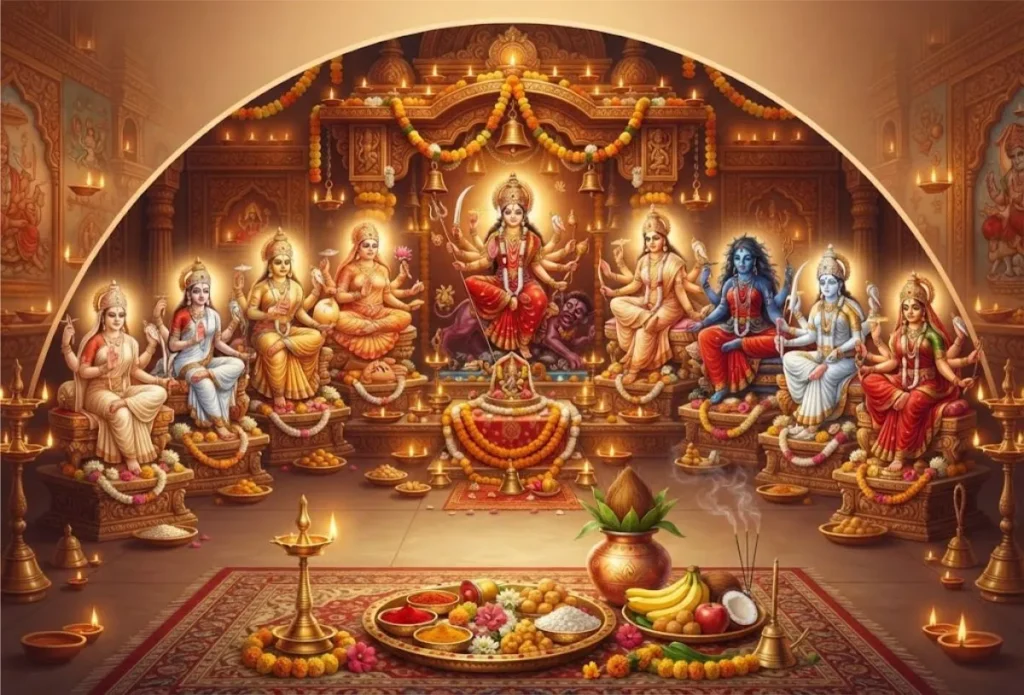
Navratri 9 days Navdurga images with puja samagri

Navratri 9 Days Images with Puja Samagri: Daily Devotion Guide for All Nine Days

Navratri 9 Days Images with Puja Samagri: Daily Devotion Guide for All Nine Days Navratri is a nine-night Hindu festival associated with devotion to the Divine Feminine. In Navdurga traditions, devotees remember nine forms of Maa Durga in sequence—from Maa Shailputri on Day 1 to Maa Siddhidatri on Day 9. India’s Ministry of Tourism lists the same nine Navdurga forms and highlights the wide regional diversity of Navratri celebrations. Incredible India If you are looking for Navratri 9 days images, this guide brings all nine Navdurga names together with short devotional context and a practical Navratri Puja Samagri checklist for home worship. There is no universally required different samagri list for each of the nine days. Many households use the same basic puja essentials throughout Navratri and add deity-, family- or tradition-specific items where appropriate. Navratri practices vary by family, region and sampradaya, so use this as a preparation and devotional guide rather than a fixed Puja Vidhi. Navratri 9 Days Images and Navdurga Names at a Glance Day Navdurga Form Common Devotional Association Day 1 Maa Shailputri Beginnings, strength and devotion Day 2 Maa Brahmacharini Devotion, discipline and spiritual focus Day 3 Maa Chandraghanta Courage and inner strength Day 4 Maa Kushmanda Energy, warmth and vitality Day 5 Maa Skandamata Motherly devotion and compassion Day 6 Maa Katyayani Strength and resolve Day 7 Maa Kalaratri Courage and protection Day 8 Maa Mahagauri Grace, peace and purity Day 9 Maa Siddhidatri Spiritual fulfillment and blessings These associations are broad devotional themes rather than universal theological definitions. Official Indian tourism material similarly connects the nine forms with themes such as beginnings, devotion, courage, energy, maternal qualities, strength, grace and spirituality. Incredible India What Is Navratri? The word Navratri means “nine nights.” The festival is celebrated through different devotional and cultural traditions across India, with many communities honoring forms of Goddess Durga or Shakti. Incredible India In Navdurga worship, the nine forms are remembered in this traditional order: Different Navratri observances take place during the year, and festival dates, rituals and regional customs can vary. This page is intentionally evergreen and focuses on the Navdurga sequence rather than one specific year’s calendar. Navratri Puja Samagri Commonly Used for All 9 Days Keeping frequently used puja materials together can make daily worship easier. Common household items may include: Not every family needs every item. A simple daily puja may use only a diya, flowers, tilak materials, water and naivedya together with the household’s normal prayers or aarti. Bhog, Naivedya and Prasad Food prepared before or during worship is better described as bhog or naivedya. After it has been offered, it may be received or distributed as prasad according to household tradition. Hindu puja guidance similarly distinguishes naivedya as food offered during worship from prasadam received after the offering. Hindu American Foundation For a broader everyday checklist, the existing Daily Puja Samagri List for Home is a useful supporting guide. SAV Products – VARUN® Navratri 9 Days Images with Names Day 1 — Maa Shailputri Maa Shailputri is worshipped as the first form in the Navdurga sequence. Her name is commonly understood in connection with the mountain, and devotional traditions associate her with beginnings, strength and the start of the nine-day spiritual journey. The first day can be approached simply: prepare the worship area, arrange the household’s normal puja essentials and begin Navratri according to family tradition. Maa Shailputri — Day 1 of Navratri. Day 2 — Maa Brahmacharini Maa Brahmacharini is the second Navdurga form. She is commonly associated in devotional traditions with discipline, devotion, simplicity and spiritual determination. The day can be observed through focused prayer, reflection and the regular household puja routine. An elaborate setup is not necessary unless it forms part of your own tradition. Maa Brahmacharini — Day 2 of Navratri. Day 3 — Maa Chandraghanta Maa Chandraghanta is worshipped on the third day. Devotional traditions commonly connect her with courage, strength and overcoming fear. The day can become an opportunity for prayer for confidence and inner steadiness. Use the same basic puja materials your household normally follows rather than assuming a completely separate list is required for Day 3. Maa Chandraghanta — Day 3 of Navratri. Day 4 — Maa Kushmanda Maa Kushmanda is the fourth form in the Navdurga sequence. She is commonly associated with divine energy, vitality, warmth and creative power. Devotees may approach the day with gratitude and prayers for well-being. Flowers and bhog/naivedya may be offered according to household tradition. Maa Kushmanda — Day 4 of Navratri. Day 5 — Maa Skandamata Maa Skandamata is worshipped on Navratri Day 5. She is commonly remembered as a motherly form of the Goddess and associated with compassion and maternal devotion. Families may use the day to pray for peace, family well-being and spiritual strength while continuing with their normal Navratri worship. Maa Skandamata — Day 5 of Navratri. Day 6 — Maa Katyayani Maa Katyayani is the sixth Navdurga form. She is commonly associated with strength, determination and courage. Devotional worship on this day may focus on resolve and the strength to follow the right path. Prepare the household’s normal diya, flowers, tilak materials and naivedya as appropriate. Maa Katyayani — Day 6 of Navratri. Day 7 — Maa Kalaratri Maa Kalaratri is worshipped on the seventh day. She is remembered as a powerful form of the Goddess and is commonly associated with courage, divine strength and protection from darkness or fear. Incredible India The devotional atmosphere may feel more intense, but worship can remain simple and consistent with family practice. Maa Kalaratri — Day 7 of Navratri. Day 8 — Maa Mahagauri Maa Mahagauri is the eighth Navdurga form and is commonly associated with grace, peace and purity. Ashtami carries special importance in many households, but the rituals followed on this day can vary considerably by region and family tradition. If your family follows a particular Ashtami observance, prepare any additional materials according to that established practice rather than relying on a generic list.

Navratri 9 Days Images with Puja Samagri: Daily Devotion Guide for All Nine Days Read More »

Scroll to Top
Enable Notifications OK No thanks