
Diwali Puja Samagri List: Complete Lakshmi Ganesh Puja Checklist
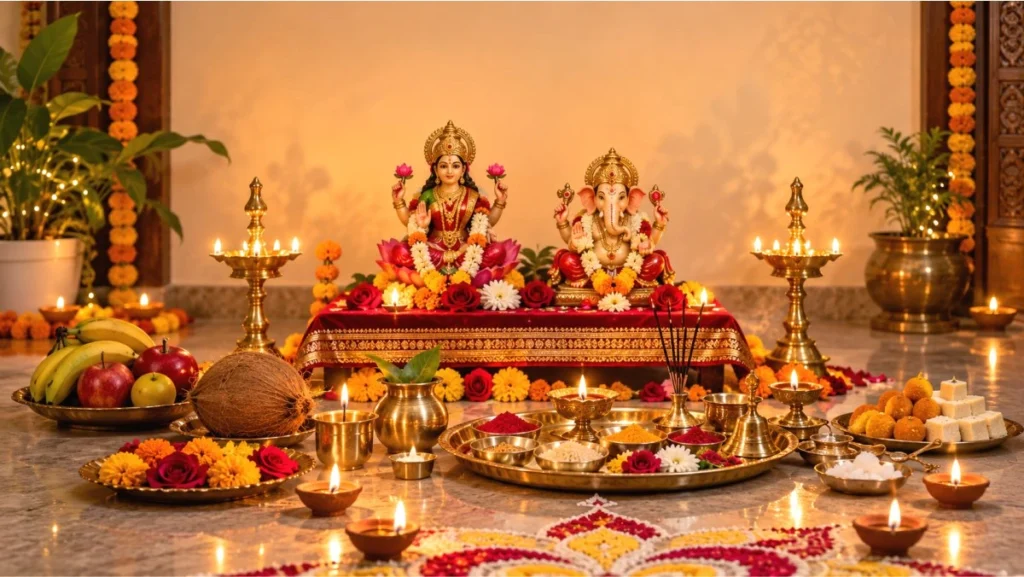
Preparing for Diwali Lakshmi-Ganesh Puja becomes much easier when the puja samagri is arranged before worship begins. Commonly used items include diyas, cotton wicks, puja ghee or oil, kumkum or roli, akshat, flowers, dhoop, kapoor, water, fruits, sweets and other food offerings.
There is no single universal Diwali Puja Samagri List followed by every Hindu household. Practices vary by family, region, sampradaya and local custom. Some families prepare a kalash and include specific leaves or coins, while others follow a much simpler Lakshmi-Ganesh Puja setup.
Use this guide as a practical preparation checklist rather than a fixed religious rule. If your family follows an established Diwali Puja method, that tradition should guide your final samagri list.
Terminology note: Bhog or naivedya refers to food presented as an offering during puja. After it has been offered, it may be received or shared as prasad according to tradition. Hindu puja guidance distinguishes naivedya from prasadam in this way. Hindu American Foundation
Diwali Puja Samagri List at a Glance
The table below gives a quick overview of commonly used Lakshmi Ganesh Puja Samagri.
| Category | Commonly Used Items |
|---|---|
| Lakshmi-Ganesh setup | Lakshmi and Ganesh murti/photo, chowki, clean cloth |
| Kalash, if followed in your tradition | Kalash, water, coconut, leaves according to tradition, mauli |
| Tilak and puja items | Kumkum/roli, haldi, chandan, akshat |
| Diya | Diyas, puja ghee or oil, cotton wicks |
| Fragrance and aarti | Dhoop, agarbatti, kapoor, aarti thali, bell |
| Flowers | Fresh flowers, garland |
| Bhog / Naivedya | Fruits, sweets and family-traditional food offerings |
| Business or trading tradition | Coins, account books, pen or cash box where customary |
| Other useful items | Paan/supari where used, matchbox/lighter |
A simple household puja may use only part of this list. The purpose is to help you prepare, not to suggest that every item is compulsory.
What Is Diwali Puja?
Diwali includes a range of religious and regional observances across India. Lakshmi Puja is one of its prominent traditions, and Lord Ganesha is also widely associated with Diwali festivities. India’s official tourism portal describes Lakshmi as associated with prosperity and fortune and Ganesha with wisdom and the removal of obstacles. Incredible India
In many households, Maa Lakshmi and Shri Ganesha are worshipped together during the main Diwali evening puja.
The exact form of worship can vary considerably. Some households include a kalash, account books, coins, additional deities or region-specific offerings. Others perform a simpler home puja using diya, flowers, tilak materials and naivedya.
Why Are Lakshmi and Ganesh Worshipped During Diwali?
A common traditional explanation connects Maa Lakshmi with prosperity and Shri Ganesha with wisdom, auspicious beginnings and the removal of obstacles.
Hindu American Foundation material also documents traditions in which Lakshmi and Ganesha are welcomed together during Diwali, while noting the festival’s wide regional diversity. Hindu American Foundation
This should be understood as a common traditional explanation, not as the only theological interpretation followed by every Hindu community.
Diwali 2026 Date
For 2026, Diwali falls on Sunday, November 8, 2026. India’s Ministry of Tourism lists Diwali on that date. Incredible India
| Festival | Date |
|---|---|
| Diwali / Lakshmi Puja 2026 | Sunday, November 8, 2026 |
What Time Is Lakshmi Puja in 2026?
The exact Lakshmi Puja Muhurat is location-dependent. It should not be presented as one universal India-wide time.
For example, Panchang calculations for Delhi, Pune, Chennai, Jaipur, Hyderabad and other cities show different Lakshmi Puja timings for the same date. Drik Panchang
If timing is important for your household, check an authoritative Panchang for your specific city before the puja.
Because this article uses an evergreen URL, the date section should be reviewed and updated each year without creating a new year-specific page.
Complete Lakshmi Ganesh Puja Samagri Checklist
Instead of using one overwhelming 40- or 50-item list, it is more practical to organize Diwali Puja Samagri by purpose.
1. Lakshmi-Ganesh Murti and Puja Setup
A common home setup may include:
- Maa Lakshmi murti or photo
- Shri Ganesh murti or photo
- Wooden chowki
- Clean cloth according to family practice
- Puja asana
- Puja thali
- Bell, if used in your home
You do not necessarily need new murtis, thalis or cloth every year. Reusable items from your home mandir can be cleaned and prepared before Diwali.
2. Kalash Samagri
If your family includes kalash sthapana in Diwali Puja, commonly used materials may include:
- Kalash
- Clean water
- Coconut
- Leaves according to family tradition
- Mauli or kalawa
- Akshat
- Coin, where customary
Kalash arrangements vary considerably, so this should be treated as a tradition-specific section rather than a compulsory Diwali kit.
If you are unsure, follow your household method or consult a knowledgeable priest.
3. Diya, Puja Ghee, Oil and Cotton Wicks
Diyas are among the most recognizable parts of Diwali worship and decoration.
Keep ready:
- Clay, brass or other suitable diyas
- Cotton wicks
- Puja ghee
- Puja oil, where used
- Matchbox or lighter
- Stable, heat-resistant diya base
Different families use ghee, particular oils or both. Follow the practice traditionally used in your household rather than treating one option as universally mandatory.
4. Kumkum, Roli, Haldi, Akshat and Chandan
Common tilak and puja materials may include:
- Kumkum
- Roli
- Haldi
- Chandan
- Akshat
- Mauli or kalawa
These can be placed in small covered containers inside or beside the puja thali.
Their use varies between traditions. One household may use several of them, while another may use only a few.
5. Dhoop, Agarbatti and Kapoor
Many families use dhoop, agarbatti or kapoor during Diwali Puja and aarti.
You may keep:
- Dhoop
- Agarbatti
- Kapoor
- Incense holder
- Camphor/aarti holder
- Aarti plate
Use burning products only in suitable holders and keep them away from curtains, paper decorations, loose clothing and children.
6. Flowers and Puja-Space Decoration Items
Fresh flowers are commonly used for offering and decorating the worship area.
You may prepare:
- Fresh flowers
- Flower garland
Optional puja-space decoration items may include:
- Rangoli materials
- Toran
- Decorative lamps
- Other household decorations
These are useful for preparing the Diwali space but should not be confused with universally required ritual samagri.
Flowers and decoration styles vary according to region, availability and family custom.
7. Bhog / Naivedya Items
Bhog or naivedya refers to food presented during worship. Once offered, it may be received or distributed as prasad. Hindu American Foundation
Depending on household tradition, Diwali naivedya may include:
- Sweets
- Fresh fruits
- Coconut
- Dry fruits
- Homemade food
- Kheel and batasha, where regionally customary
- Other family-traditional offerings
There is no need to copy a very long food list if your family traditionally offers only a few items.
Choose clean, fresh offerings that are suitable for your household tradition.
8. Coins, Bahi-Khata and Business Puja Items
Some business and trading communities observe Diwali with Chopda Puja, bahi-khata puja or related account-book traditions.
This practice is particularly associated with Gujarati and some western Indian business communities, rather than being a universal requirement for all shops or businesses. Hindu American Foundation and Panchang sources document the blessing or inauguration of business account books during Diwali traditions. Hindu American Foundation
Depending on tradition, items may include:
- Bahi-khata or account book
- Pen
- Coins
- Cash box or safe
- Business records
- Other work-related items
If your business follows this tradition, organize the relevant items in advance.
Common Home Setup vs Tradition-Specific Items
Not every item found in a long online Diwali checklist is necessary for every household.
| Common Simple-Home Setup | Additional / Tradition-Specific |
|---|---|
| Lakshmi-Ganesh image or murti, if followed | Kalash setup |
| Diya | Particular leaves |
| Cotton wick | Havan Samagri |
| Puja ghee or oil | Special ritual vessels |
| Kumkum / Roli | Specific numbers of diyas |
| Akshat | Regional offerings |
| Flowers | Account books / Chopda items |
| Bhog / Naivedya | Family-specific ingredients |
| Dhoop / Kapoor | Additional deity-specific materials |
A simple family puja does not need to become an elaborate ritual merely because an online checklist contains dozens of items.
What If You Don’t Have Every Puja Item?
Do not let a missing checklist item turn Diwali preparation into unnecessary stress.
If your household normally performs a simple puja, use the materials appropriate to that established practice.
For tradition-specific rituals, do not invent substitutions simply because something is unavailable. Follow your family custom or ask a knowledgeable priest if a particular material is important to the ritual.
The purpose of a samagri list is to help with preparation—not to make worship dependent on purchasing the largest possible collection of items.
A Practical Diwali Puja Preparation Timeline
The following timeline is planning advice, not a religious rule.
5–7 Days Before
Check reusable and packaged supplies:
- Review existing puja items before shopping.
- Clean reusable diyas.
- Replace damaged clay diyas if necessary.
- Check puja ghee and oil.
- Refill cotton wicks.
- Check dhoop, agarbatti and kapoor.
- Check kumkum, roli, chandan and mauli.
- Clean the puja thali, bell and reusable containers.
- Prepare a shopping list only for what is missing.
This is also a good time to review your Daily Puja Samagri List for Home so you do not repurchase everyday items already available.
One Day Before
Bring the main supplies together:
- Prepare the puja thali.
- Wash reusable utensils.
- Arrange dry and packaged items.
- Keep murtis/photos, chowki and cloth ready.
- Separate food offerings from non-food materials.
- Check the complete diya setup.
Flowers, garlands and sweets can be arranged closer to the puja so they remain fresh.
A coconut can be purchased according to convenience; if your household prefers buying it fresh close to puja, include it with the final shopping.
Before Puja Begins
Just before worship:
- Clean the worship area.
- Arrange the Lakshmi-Ganesh setup.
- Prepare the kalash if followed in your tradition.
- Arrange kumkum, chandan, akshat and flowers.
- Prepare the diya with wick and ghee or oil.
- Keep bhog/naivedya ready.
- Keep dhoop, kapoor and aarti materials within safe reach.
- Place the matchbox or lighter safely nearby.
Avoid keeping open containers of oil or ghee beside a burning flame.
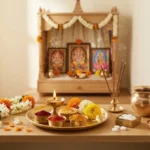
How to Arrange a Lakshmi Ganesh Puja Thali
A clean puja thali keeps frequently used materials within easy reach.
A simple thali may include:
- Kumkum or roli
- Akshat
- Chandan
- Flowers
- Diya
- Cotton wick
- Puja ghee
- Kapoor, if used
- Small dhoop/incense arrangement
- Small bowl or plate for naivedya, where appropriate
Larger items such as a kalash, coconut, fruits and larger food offerings can be placed beside the thali.
Avoid overcrowding the plate. A practical layout is easier to use than trying to fit every item into one thali.
A separate article on “Diwali Puja Thali” is not automatically necessary. If its search intent is substantially the same as this page, expanding this section is preferable to creating a near-duplicate URL.
Basic Diwali Lakshmi-Ganesh Puja Preparation
This article is a samagri guide rather than a universal Puja Vidhi.
A general preparation sequence may look like this:
- Clean and prepare the worship area.
- Arrange Lakshmi-Ganesh images or murtis according to family practice.
- Prepare the kalash if your tradition includes it.
- Arrange tilak materials, flowers and other offerings.
- Prepare the diya with ghee or oil and a cotton wick.
- Keep dhoop, kapoor and aarti materials safely nearby.
- Arrange bhog/naivedya for offering.
- Follow your family’s established puja sequence, priestly guidance or trusted tradition.
- After the offering, receive or distribute the food as prasad according to your practice.
This keeps the article focused on preparation without presenting one household’s ritual sequence as universal.
Which Diwali Puja Items Should You Buy Early?
Buy in Advance
Packaged and reusable items can generally be purchased before the final festival rush:
- Puja ghee
- Puja oil
- Cotton wicks
- Kapoor
- Dhoop
- Agarbatti
- Kumkum
- Chandan
- Mauli
- Diyas
- Puja thali supplies
- Rangoli materials
Arrange Closer to Diwali
Items that are usually preferred fresh include:
- Flowers
- Garlands
- Fruits
- Sweets
- Fresh leaves where used
- Homemade bhog/naivedya
- Coconut, if your household prefers to purchase it fresh close to the puja
Keeping fresh and non-perishable items on separate lists can make shopping easier.
Common Diwali Puja Preparation Mistakes
Buying Every Item From a Generic List
Different families follow different methods. More items do not automatically make the puja more correct.
Waiting Until Diwali Evening
Basic supplies are easier to forget when shopping is rushed. Check packaged and reusable items in advance.
Forgetting the Complete Diya Setup
Check these items together:
Diya + Cotton Wick + Ghee/Oil + Safe Lighting Method
Mixing Food and Non-Food Materials
Keep fruits, sweets and other naivedya away from dhoop, camphor, kumkum and oil to reduce spills, odors and contamination.
Treating Regional Traditions as Universal
Kalash arrangements, business puja, food offerings and other customs can differ by family, sampradaya and region.
Diwali Puja Fire and Diya Safety
Diwali worship often combines open flames with flowers, clothing and decorative materials, so basic fire precautions matter.
- Place diyas on stable surfaces.
- Keep oil lamps and incense away from combustible decorations.
- Keep loose clothing away from flames.
- Supervise children around diyas and aarti.
- Maintain reasonable ventilation when using incense indoors.
- Do not leave diya, dhoop, candles or camphor burning unattended.
- Avoid positioning flames where they can easily be knocked over.
Delhi Fire Service specifically advises keeping oil lamps and agarbatti away from combustible material and never leaving open fire unattended. dfs.delhi.gov.in
Diwali Puja Shopping Checklist
Puja Setup
☐ Maa Lakshmi murti/photo
☐ Shri Ganesh murti/photo
☐ Chowki
☐ Clean cloth
☐ Puja thali
☐ Bell, if used
Kalash, If Followed
☐ Kalash
☐ Clean water
☐ Coconut
☐ Leaves according to tradition
☐ Mauli
☐ Akshat
Diya and Aarti
☐ Diyas
☐ Cotton wicks
☐ Puja ghee
☐ Puja oil, if used
☐ Kapoor
☐ Dhoop / Agarbatti
☐ Matchbox / Lighter
Puja Essentials
☐ Kumkum / Roli
☐ Haldi
☐ Akshat
☐ Chandan
☐ Mauli / Kalawa
Fresh Offerings
☐ Flowers
☐ Garland
☐ Fruits
☐ Sweets
☐ Coconut, if required
☐ Family-traditional bhog / naivedya
Business Puja, If Followed
☐ Bahi-khata / account book
☐ Pen
☐ Coins
☐ Cash box or business area prepared
After Puja: Prasad and Used Offerings
After bhog or naivedya has been offered, it may be shared as prasad according to household tradition. Hindu puja guidance similarly describes partaking of and sharing prasadam after worship. Hindu American Foundation
For other used offerings:
- Remove flowers before they decay.
- Handle dedicated items respectfully according to family practice.
- Compost natural flowers where appropriate.
- Clean reusable diya, thali and containers after they have cooled.
- Dispose of packaging responsibly.
- Follow local environmental rules rather than placing puja waste indiscriminately in public spaces or water bodies.
Specific religious handling practices can vary, so follow your own tradition where it gives particular guidance.
VARUN Diwali Puja Essentials
Commercial disclosure: SAV Products manufactures and markets VARUN Pooja Products.
For households that already use packaged puja consumables, the current SAV Products range includes items such as:
- Puja Ghee for Diya
- Puja Oil
- Cotton Wicks
- Puja Camphor
- Humad Dhoop
- Kumkum
- Sandal Powder
- Mauli and other puja products
These products are currently represented in SAV Products’ published catalog. savproducts.com
Choose only the items that fit your household’s actual puja requirements rather than purchasing an unnecessarily large festival kit.
Frequently Asked Questions About Diwali Puja Samagri
When is Diwali in 2026?
Diwali falls on Sunday, November 8, 2026. Exact Lakshmi Puja timings vary by city, so check a location-specific Panchang. Incredible India
What items are commonly used for Diwali Lakshmi Puja?
Common items include Lakshmi-Ganesh images or murtis, diya, cotton wick, ghee or oil, kumkum or roli, akshat, flowers, dhoop, kapoor, water and bhog/naivedya. Additional items depend on family tradition.
What is the difference between naivedya and prasad?
Naivedya or bhog is food presented during worship. After it has been offered, it may be received or shared as prasad. Hindu American Foundation
Can ghee or oil be used in Diwali diyas?
Both are used in different household traditions. Follow the practice customary in your family.
How many diyas are required for Diwali Puja?
There is no single compulsory number for every household. The number varies by family practice, ritual method and decoration.
When should I buy Diwali Puja Samagri?
Packaged and reusable items can be checked or purchased several days ahead. Flowers, sweets, fruits and other fresh offerings are usually better arranged closer to the puja.
Is every item in an online Diwali Puja list compulsory?
No. Puja practices vary by family, region and sampradaya. Use online lists for preparation and let your established tradition determine the final requirements.
What should I do if I cannot find every item?
For a simple household puja, follow your normal family practice with the items you use. For ritual-specific substitutions, consult your family tradition or a knowledgeable priest instead of assuming one universal replacement.
Conclusion
A useful Diwali Puja Samagri List should simplify festival preparation rather than turn it into an oversized shopping exercise.
Start with the items your household genuinely uses—such as diya, cotton wick, ghee or oil, kumkum or roli, akshat, flowers, dhoop and bhog/naivedya. Add kalash materials, business-puja items and other tradition-specific samagri only when they belong to your family’s practice.
For 2026, Diwali falls on November 8, while Lakshmi Puja timing should be checked for your specific location. Prepare reusable and packaged items early, arrange fresh offerings closer to the festival, and keep diya and aarti safety in mind.
Most importantly, let your household tradition determine the final Lakshmi-Ganesh Puja setup.
Sources & References
Key factual and religious references used for this guide include India’s official Incredible India festival calendar for the 2026 Diwali date and general festival context; Hindu American Foundation’s Diwali and home-puja guidance for Lakshmi-Ganesh traditions and naivedya/prasadam terminology; Drik Panchang for location-dependent Lakshmi Puja calculations and Chopda Puja context; and Delhi Fire Service for open-flame safety guidance.