
Chhath Puja Samagri List: Complete Bihar Checklist
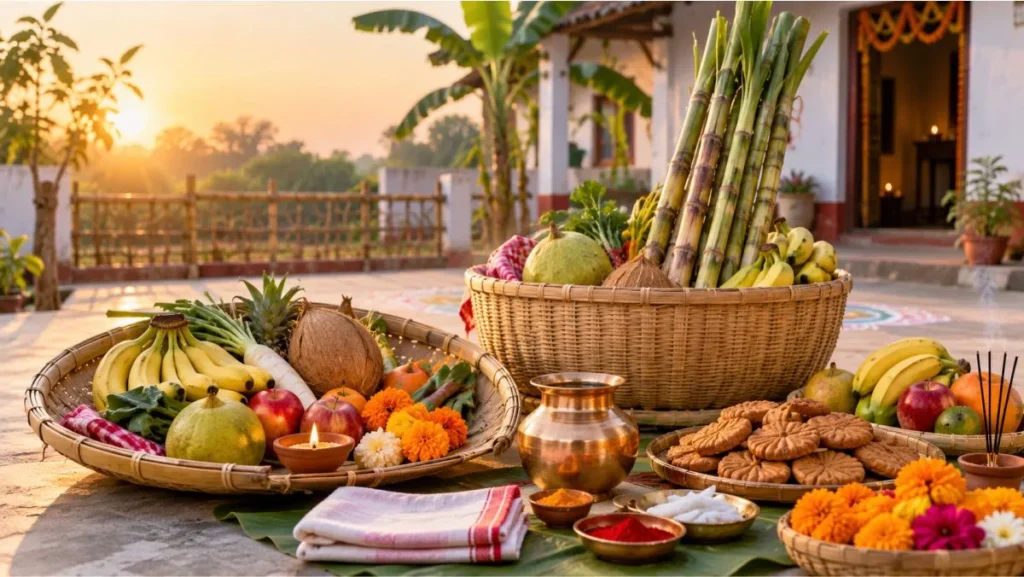
Preparing for Chhath Puja involves much more than arranging a regular puja thali. Families may need soop and daura, fruits, sugarcane, coconut, arghya vessels, diya materials, ingredients for Kharna and traditional prasad such as thekua.
Because Chhath continues across four days, the easiest way to prepare is to divide the Chhath Puja Samagri List into a few practical groups: reusable items, fresh fruits and produce, prasad ingredients, arghya materials and the supplies required for each day.
Chhath traditions can vary between families, districts and communities across Bihar and other regions where the festival is observed. This checklist is therefore a practical Bihar-focused preparation guide, not a rule that every household must follow in exactly the same way.
Chhath Puja 2026 Dates in Bihar
For Patna, Bihar, the 2026 Chhath sequence is:
| Day | Chhath Puja 2026 |
|---|---|
| Day 1 – Nahay Khay | Friday, November 13, 2026 |
| Day 2 – Kharna / Lohanda | Saturday, November 14, 2026 |
| Day 3 – Sandhya Arghya | Sunday, November 15, 2026 |
| Day 4 – Usha Arghya & Parana | Monday, November 16, 2026 |
Drik Panchang’s Patna calendar confirms this four-day sequence. For Patna, Sandhya Arghya is on November 15 and Usha Arghya with Parana is on November 16. Drikpanchang
Sunrise and sunset times are location-specific. Families in Gaya, Muzaffarpur, Bhagalpur, Darbhanga and other cities should check the timing for their own location before the festival.
What Is Chhath Puja?
Chhath Puja is a four-day Hindu observance with especially deep cultural importance in Bihar. Worship centers on Surya Dev, with arghya offered to both the setting and rising sun. Bihar Tourism describes the festival as a four-day observance, with Kharna on the second day, evening arghya on the third and morning arghya followed by breaking the fast on the fourth. Bihar Tourism
The four days are commonly known as:
- Nahay Khay
- Kharna or Lohanda
- Sandhya Arghya
- Usha Arghya and Parana
Chhathi Maiya, or Shashthi Devi, also holds an important place in Chhath devotion. Bihar Tourism’s cultural material describes Chhath as dedicated to the Sun and Shashthi Devi/Chhathi Maiya. Bihar Tourism
Chhath Puja Samagri List at a Glance
| Category | Common Items |
|---|---|
| Soop & Daura | Soop, daura, carrying basket |
| Arghya | Lota or suitable vessel, clean water, milk where followed |
| Fruits | Banana, coconut, seasonal fruits |
| Traditional Produce | Sugarcane and locally followed produce |
| Prasad | Wheat flour, jaggery, rice, milk and recipe-specific ingredients |
| Puja Essentials | Diya, cotton wick, puja ghee/oil for diya use, dhoop, camphor, sindoor/kumkum |
| Other Items | Betel nut, leaves and household-specific offerings where followed |
Not every family uses every item. Local availability and long-established household traditions should determine the final list.
Complete Chhath Puja Samagri Checklist
1. Soop, Daura and Carrying Baskets
Soop and daura are among the most recognizable Chhath items.
In common usage:
- Soop / सूप is a flatter tray used to arrange or present offerings.
- Daura / दउरा commonly refers to a deeper carrying basket used for fruits, prasad and other samagri.
Government cultural material describes the Chhath soop/dala as a flat basket that may be made of bamboo or metal, so bamboo should not be presented as the only possible material used by every family. Ministry of Information and Broadcasting
Depending on household practice, prepare:
- Soop
- Daura
- Additional carrying basket
- Clean cloth for covering or carrying items
If you are reusing older bamboo items, inspect them beforehand. They should be clean, dry and strong enough to carry the intended load.
2. Fruits and Fresh Produce
Fruits and agricultural produce are important parts of many Chhath offerings.
Common items include:
- Banana or banana bunch
- Coconut
- Sugarcane
- Seasonal fruits
- Radish, where traditionally used
- Raw turmeric, where followed
- Ginger, where followed
- Water chestnut or other local produce according to season and family tradition
Government sources documenting Chhath traditions specifically mention fruits, thekua, coconut, banana and sugarcane among commonly associated offerings. Bihar Bhawan
There is no need to buy every fruit or vegetable mentioned in an online list. Begin with the produce traditionally used in your household.
Freshness also matters. Delicate fruits and other perishables are generally better purchased closer to the arghya days.
3. Arghya Samagri
For Sandhya and Usha Arghya, families may prepare:
- Lota or another suitable arghya vessel
- Clean water
- Milk where followed
- Prepared soop
- Fruits and traditional offerings
- Flowers where part of family practice
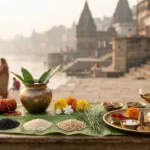
Sandhya Arghya is offered to the setting sun on the third day.
Usha Arghya is offered to the rising sun on the fourth morning, after which Parana takes place. Bihar Tourism
The exact vessel, milk use and method of offering can vary, so avoid treating one ratio or one arrangement as compulsory for every household.
4. Diya and Other Non-Food Puja Essentials
Depending on your household tradition, keep:
- Diya
- Cotton wicks
- Puja ghee or puja oil intended for diya use
- Pooja Camphor
- Dhoop or incense
- Matchbox or lighter
- Heat-safe diya holder or plate
- Sindoor
- Kumkum or roli
- Chandan where used
- Mauli where followed
- Clean puja cloth
One distinction is especially important:
A product intended only for diya or ritual use should not automatically be used as a food ingredient.
For example, SAV Products publicly describes its Pooja Ghee as “Pooja Ghee for Diya.” Ritual-use ghee or oil should therefore not be used for thekua, Kharna food or any edible prasad unless the specific packaging clearly states that it is suitable for consumption. SAV Products
Chhath Prasad Samagri
Food ingredients should be organized separately from non-food puja supplies such as camphor, dhoop and diya fuel.
Thekua Ingredients
Thekua is one of the best-known traditional Chhath prasad preparations.
Bihar Tourism identifies whole-wheat flour, ghee and jaggery as key ingredients and describes thekua as a traditional Bihar preparation offered as Chhath prasad. Bihar Tourism
A household recipe may therefore include:
- Whole-wheat flour
- Jaggery
- Edible ghee
- Optional household ingredients such as fennel, coconut or cardamom
Some families may use a different edible frying medium according to their own recipe. Whatever recipe is followed, use ingredients intended for human consumption.
Do not substitute a ritual-only puja oil or diya ghee unless its label specifically approves food use.
Kharna Prasad Ingredients
Kharna is observed on the second day.
Bihar Tourism describes kheer and fruit among the offerings associated with Kharna. Bihar Tourism
A Bihar government publication also documents Kharna kheer made with rice, jaggery and milk, while another state publication notes kheer and wheat-flour roti in Chhath practice. Bihar Bhawan
Depending on family tradition, ingredients may therefore include:
- Rice
- Milk
- Jaggery
- Fruit
- Wheat flour for roti where followed
Some households refer to a jaggery-based preparation as rasiao. Recipes and terminology can differ, so follow the method traditionally used in your family.
Chhath Puja Samagri for All Four Days
Day 1 – Nahay Khay
For Nahay Khay, preparation may focus on:
- Clean cooking utensils
- Ingredients for the family’s traditional meal
- Clean water
- Clean cooking and puja area
- Basic puja materials where used
There is no need to treat one online Nahay Khay menu as compulsory for all Bihar households.
Day 2 – Kharna / Lohanda
Prepare according to family tradition:
- Rice
- Milk
- Jaggery where used
- Fruit
- Wheat-flour roti ingredients where followed
- Clean cooking utensils
- Serving vessels
- Basic diya/puja supplies
Keep edible ingredients and cooking equipment separate from ritual-use products.
Day 3 – Sandhya Arghya
This is generally one of the most preparation-heavy stages.
A Bihar-oriented checklist may include:
- Soop
- Daura
- Banana
- Coconut
- Sugarcane
- Seasonal fruits
- Thekua
- Other household-traditional produce
- Arghya lota
- Clean water
- Milk where followed
- Diya supplies
- Sindoor or kumkum
- Other family-specific offerings
This is an illustrative list rather than a mandatory inventory.
Prepare baskets and offerings before leaving for the ghat whenever possible.
Day 4 – Usha Arghya & Parana
Many items prepared for Sandhya Arghya continue into the next morning:
- Prepared soop
- Arghya vessel
- Fruits and offerings
- Clean water
- Milk where followed
- Prasad
- Family-specific Parana items
Because families often leave early for Usha Arghya, keeping the essential items organized the previous night can reduce morning confusion.
Soop Mein Kya-Kya Rakha Jata Hai?
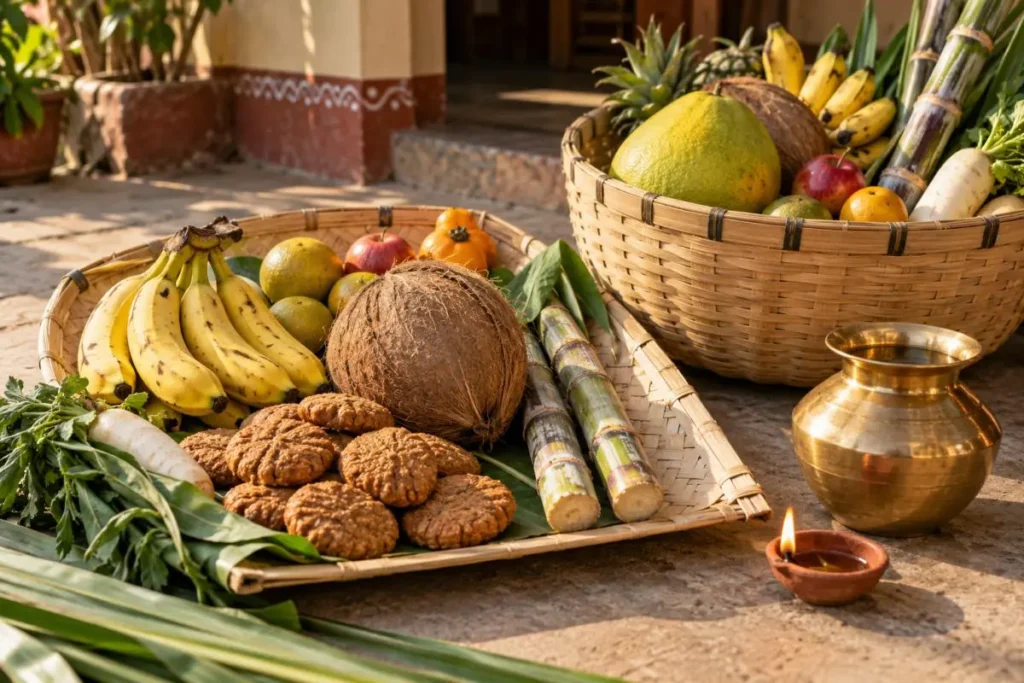
A Chhath soop commonly includes items such as:
- Thekua
- Banana
- Coconut
- Seasonal fruits
- Other traditional agricultural offerings
- Family-specific prasad
The Ministry of Information and Broadcasting’s Chhath material describes the soop/dala as a tray used to carry offerings, while Bihar government sources document thekua, fruits, coconut and banana as Chhath offerings. Ministry of Information and Broadcasting
The exact contents and arrangement vary by locality and household.
Soop and Daura: What Is the Difference?
A simple practical distinction is:
Soop: a flatter tray commonly used to arrange and present offerings.
Daura: a deeper basket commonly used to carry larger quantities of fruits, prasad and other Chhath items.
This distinction is useful for younger family members or those preparing for Chhath away from Bihar for the first time, but local terminology and materials can vary.
What Should You Buy Early and What Should You Buy Fresh?
| Buy Early | Buy Closer to Use |
|---|---|
| Soop / Daura | Fresh fruits |
| Diyas | Banana bunch |
| Cotton wicks | Sugarcane |
| Pooja Camphor | Flowers |
| Dhoop | Fresh traditional produce |
| Puja ghee/oil for diya | Milk |
| Dry prasad ingredients | Other perishables |
| Arghya vessel | Coconut if your family prefers buying it fresh |
This division is more practical than trying to purchase everything on one day.
Practical Chhath Puja Shopping Timeline
This is only an organizational suggestion—not a religious schedule.
Around One Week Before
Check:
- Soop and daura condition
- Arghya vessel
- Diyas
- Cotton wicks
- Camphor and dhoop
- Dry prasad ingredients
- Carrying baskets
Replace damaged reusable items if necessary.
3–4 Days Before
Arrange shelf-stable items such as:
- Wheat flour
- Jaggery
- Dry puja supplies
- Cotton wicks
- Diya supplies
- New soop or daura, if required
1–2 Days Before
Plan or purchase fresh items according to their shelf life:
- Fruits
- Bananas
- Sugarcane
- Coconut
- Traditional produce
- Flowers
Purchase and store milk according to household need, refrigeration availability and the package instructions rather than automatically buying several days in advance.
FSSAI advises keeping perishables such as milk chilled and recommends keeping prepared food covered and stored appropriately. FSSAI
Before Sandhya Arghya
Do one final check:
- Soop
- Daura
- Thekua and other prasad
- Fruits
- Sugarcane
- Arghya vessel
- Water
- Diya supplies
- Family-specific offerings
A short check before leaving home can prevent an important item being discovered missing only after reaching the ghat.
Cleanliness and Food Safety During Chhath Preparation
Large quantities of fruits and prasad may be prepared during Chhath, so basic food hygiene is important.
- Wash hands before handling food.
- Use clean utensils and preparation surfaces.
- Keep prepared food covered where practical.
- Keep edible ingredients separate from ritual-only products.
- Store milk and other perishables safely.
- Keep camphor and dhoop away from food-preparation areas.
- Use clean containers for carrying prasad.
- Follow storage directions on packaged ingredients.
FSSAI guidance emphasizes clean hands and surfaces, covered food and appropriate refrigeration for perishables. FSSAI
Questions about ritual purity or what may affect a vrat should be answered according to established family tradition or guidance from a knowledgeable religious person rather than generic food-safety advice.
Chhath Puja at the Ghat: What to Carry
Separating puja items from personal belongings makes travel and movement at the ghat easier.
Puja and Arghya Items
- Prepared soop
- Daura
- Arghya lota
- Fruits
- Thekua and other prasad
- Traditional offerings
- Diya supplies where used
Practical Family Items
- Clean cloth
- Drinking water for accompanying non-vrati family members
- Required medicines
- Weather-appropriate clothing
- Small towel where useful
- Secure bag for personal belongings
Avoid carrying unnecessary valuables.
Chhath Puja Safety at the Ghat
Crowded ghats, wet surfaces and open flames require care.
- Follow current local administration, police and ghat-management instructions.
- Use designated access and worship areas where provided.
- Supervise children closely.
- Assist elderly family members.
- Take extra care on wet or slippery steps.
- Avoid crowded edges.
- Keep baskets out of walking routes.
- Carry lit diyas carefully.
- Keep personal belongings secure.
- Do not leave diya or other open flame unattended.
Delhi Fire Service advises keeping oil lamps and agarbattis away from combustible material and never leaving open fire unattended. Delhi Fire Service
Local ghat access, barricades, parking and route arrangements can change each year, so current district, municipal or police advisories should always take priority.
Save / Screenshot Chhath Puja Checklist
Soop & Daura
☐ Soop
☐ Daura
☐ Additional basket if required
Arghya
☐ Lota / suitable arghya vessel
☐ Clean water
☐ Milk where followed
Fruits & Produce
☐ Banana / banana bunch
☐ Coconut
☐ Sugarcane
☐ Seasonal fruits
☐ Family-traditional produce
Prasad Ingredients
☐ Whole-wheat flour
☐ Jaggery
☐ Edible ghee according to recipe
☐ Rice
☐ Milk
☐ Kharna ingredients
☐ Other household recipe ingredients
Non-Food Puja Items
☐ Diya
☐ Cotton wicks
☐ Puja ghee/oil for diya use
☐ Pooja Camphor
☐ Dhoop
☐ Sindoor / Kumkum
☐ Matchbox / lighter
Ghat & Family Essentials
☐ Clean cloth
☐ Carrying bags/containers
☐ Required medicines
☐ Personal essentials
☐ Family-specific traditional items
VARUN Pooja Essentials for Chhath
For households that use packaged puja supplies, SAV Products currently lists categories including:
- Pooja Ghee for Diya
- Pooja Oil
- Pooja Camphor
- Organic Humad Dhoop
- Cotton Wick
- Kumkum
- Sindoor
- Mauli Dhaga
These can be kept with the non-food puja supplies where they match household practice. SAV Products
The distinction between ritual products and food ingredients is important during Chhath:
Do not use Pooja Ghee for Diya, Pooja Oil or other ritual-only products in thekua, Kharna food or edible prasad unless the exact product label clearly states that it is suitable for consumption.
For food preparation, use ingredients sold and labelled for human consumption.
Frequently Asked Questions
What are the main Chhath Puja Samagri items?
Common items include soop, daura, banana, coconut, sugarcane, seasonal fruits, thekua ingredients, an arghya vessel, diya, cotton wicks, dhoop, camphor and household-specific offerings.
What is kept in Chhath soop?
Thekua, banana, coconut, seasonal fruits and other traditional offerings may be arranged in the soop. Exact contents vary by family and locality.
Is bamboo soop compulsory for Chhath?
Bamboo soop is strongly associated with Chhath tradition, but not every family necessarily uses identical materials. Government cultural material also documents soop/dala made from bamboo or metal. Ministry of Information and Broadcasting
What is a Chhath daura?
In common Bihar usage, daura is a deeper basket used for carrying fruits, prasad and other offerings, while soop is flatter and commonly used for arranging or presenting them.
What is needed for Sandhya Arghya?
Families commonly prepare soop, daura, fruits, coconut, sugarcane, thekua, an arghya vessel, clean water and other household-traditional offerings.
What is needed for Usha Arghya?
Many Sandhya Arghya items continue into the following morning, including the soop, offerings and arghya vessel. Usha Arghya is followed by Parana. Drikpanchang
What prasad is commonly prepared for Chhath?
Thekua is one of the best-known Chhath preparations. Bihar Tourism identifies whole-wheat flour, ghee and jaggery as key ingredients. Bihar Tourism
What is commonly prepared for Kharna?
Bihar Tourism documents kheer and fruit for Kharna. Other Bihar government sources describe rice, milk and jaggery in Kharna kheer and also document roti in some Chhath traditions. Bihar Tourism
Can all Chhath samagri be purchased several days early?
No. Reusable items, dry ingredients, diyas, wicks and other shelf-stable supplies can be arranged earlier. Fruits, flowers, milk and other perishables should be purchased according to freshness and safe-storage needs.
Is every online Chhath Puja Samagri List compulsory?
No. Family and regional practices differ. Use a checklist for organization, then adjust it according to the traditions followed in your household.
Can puja ghee be used to make thekua?
Only if the exact product is clearly labelled as suitable for human consumption.
A ghee marketed specifically for diya or ritual use should not automatically be treated as cooking ghee.
Final Thoughts
A useful Chhath Puja Samagri List should help families understand not only what may be needed, but also when different items should be arranged.
Start with reusable essentials such as soop, daura and the arghya vessel. Buy dry puja supplies and prasad ingredients early, then purchase fruits, milk and other perishables closer to when they will be used.
Keep food ingredients separate from ritual-only products, organize Sandhya and Usha Arghya supplies before leaving home, and check current local ghat instructions before travelling.
Most importantly, let your family’s established Chhath tradition determine the final checklist rather than treating every long online list as compulsory.
Sources and References
The 2026 Patna Chhath dates and four-day calendar are verified against Drik Panchang’s Patna-specific calendar. Drikpanchang
Festival chronology, Kharna, Sandhya Arghya, Usha Arghya and Bihar’s Chhath traditions are supported by Bihar Tourism. Bihar Tourism
Chhathi Maiya/Shashthi Devi is referenced in Bihar Tourism’s official Chhath cultural material. Bihar Tourism
Thekua ingredients and its use as Chhath prasad are supported by Bihar Tourism. Bihar Tourism
Food-hygiene guidance is based on FSSAI materials, and open-flame precautions are supported by Delhi Fire Service.