Dussehra Puja Samagri List: Complete Home Puja Checklist
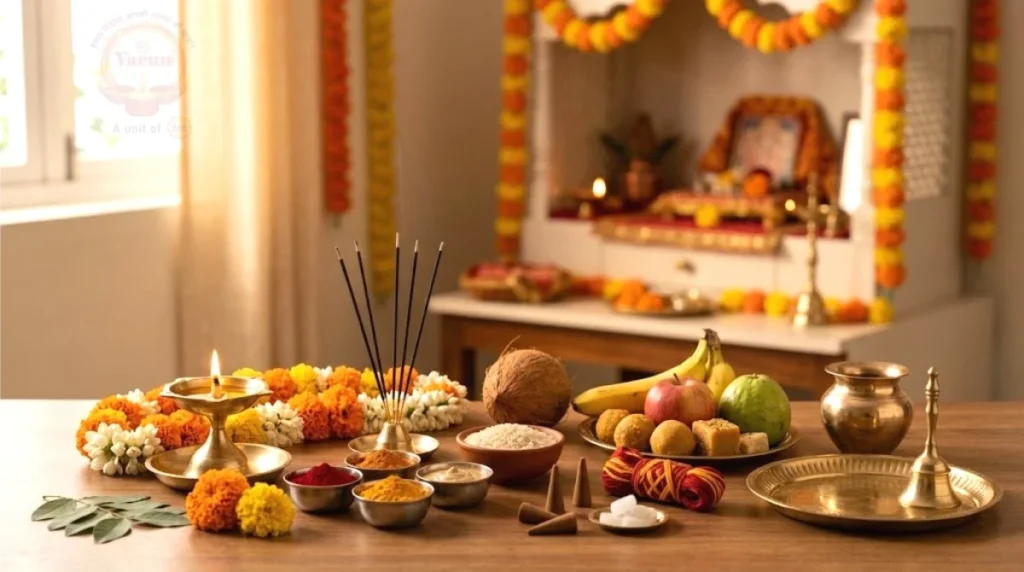
Preparing for Dussehra or Vijayadashami puja at home is easier when the commonly used puja items are arranged in advance. A simple setup may include a diya, puja ghee or oil, cotton batti, kumkum or roli, akshat, flowers, dhoop or agarbatti, kapoor, water, and food for naivedya.
There is no single universal Dussehra puja samagri list for every Hindu household. Vijayadashami traditions vary by region, sampradaya, deity worship, and family custom. Some families perform a simple home puja, while others observe Shami Puja, Aparajita Puja, Ayudha Puja, or other regional traditions.
Use this guide as a practical preparation checklist rather than a fixed religious rule. If your family follows a specific method, give that tradition priority.
Important: Shami Puja, Aparajita Puja, Ayudha Puja, and other Vijayadashami observances are not practiced identically everywhere. Their timing and required samagri should be confirmed according to your regional Panchang and family tradition.
Dussehra Puja Samagri List at a Glance
दशहरा पूजा सामग्री लिस्ट
The table below covers commonly used Dussehra puja items for home.
| Puja Samagri | Hindi | Common Use |
|---|---|---|
| Diya / Deepak | दीपक | Lighting during puja and aarti |
| Puja Ghee or Puja Oil | पूजा घी / पूजा तेल | Used for lighting diya |
| Cotton Wick | रूई की बत्ती | Used in diya |
| Kumkum / Roli | कुमकुम / रोली | Tilak and puja |
| Akshat | अक्षत | Traditional offering |
| Haldi | हल्दी | Used in many family traditions |
| Chandan | चंदन | Tilak and devotional use |
| Flowers | फूल | Offering |
| Garland | माला | Decoration and offering |
| Dhoop / Agarbatti | धूप / अगरबत्ती | Devotional fragrance |
| Kapoor | कपूर | Aarti in many traditions |
| Mauli / Kalawa | मौली / कलावा | Ritual thread |
| Coconut | नारियल | Used in some festival traditions |
| Fruits | फल | Food offering / naivedya |
| Sweets | मिठाई | Food offering / naivedya |
| Water / Gangajal | जल / गंगाजल | Offering and puja preparation |
| Puja Thali | पूजा थाली | Organising puja items |
| Bell | घंटी | Used during worship or aarti |
| Shami Leaves* | शमी पत्र | Used in some Vijayadashami traditions |
*Shami leaves and several other tradition-specific materials are not required in every household.
Aparajita Puja is a Vijayadashami observance in some traditions; it should not be treated as a generic physical samagri item. If your family performs Aparajita Puja, confirm the required materials according to your tradition or priestly guidance. Panchang references recognize both Shami Puja and Aparajita Puja as Vijayadashami observances.
Common Items for a Simple Home Dussehra Puja
You do not need to buy every item shown on a long festival checklist. For a simple Dussehra puja at home, begin with the items your household actually uses.
Diya, Puja Ghee or Oil and Cotton Batti
A diya, or deepak, is commonly used during Dussehra puja and aarti. Depending on household tradition, it may be lit with puja ghee or puja oil using a cotton wick.
For a simple setup, keep:
- One stable diya
- Puja ghee or puja oil
- Clean cotton batti
- Matchbox or lighter
- A stable, heat-resistant plate or surface
Place the diya away from curtains, paper decorations, loose cloth, and other combustible materials. Never leave a burning diya, dhoop, or camphor unattended. Delhi Fire Service similarly advises keeping oil lamps and agarbatti away from combustible materials and not leaving open flames unattended.
Kumkum, Roli, Haldi, Akshat and Chandan
Kumkum or roli is commonly kept in the puja thali for tilak. Haldi is also used in many regional and family traditions.
Akshat generally refers to unbroken rice grains used as an offering. Chandan may be prepared as a paste or used in another form according to family practice.
Small quantities are usually sufficient for home worship. Keep dry items covered and separate from water, oil, flowers, and food offerings.
Not every household needs to use all of these items in the same way.
Flowers, Garland and Shami Leaves
Fresh flowers are commonly offered during Vijayadashami. Depending on availability and family custom, households may use marigold, another fresh flower, or a garland to decorate the puja space.
Some Vijayadashami traditions also include Shami Puja, using Shami leaves or worship of a Shami tree. This is a recognized tradition but should not be presented as compulsory for every household.
If your family observes Shami Puja, arrange the required items close to the festival so that natural materials remain fresh.
Dhoop, Agarbatti and Kapoor
Dhoop or agarbatti is commonly used during puja, while kapoor is used for aarti in many households.
Use a proper incense or camphor holder and keep burning items away from:
- Curtains
- Paper decorations
- Plastic
- Loose clothing
- Children and pets
Keep the area reasonably ventilated when using dhoop or agarbatti indoors.
Fruits, Sweets and Naivedya
Naivedya refers to food presented as an offering during worship. After it has been offered, it may be received or distributed as prasad according to family tradition.
Common Dussehra food offerings may include:
- Fresh fruits
- Sweets
- Coconut
- Homemade food
- Other household-specific offerings
There is no single compulsory fruit or sweet for every Dussehra puja. Choose fresh offerings that are appropriate for your family tradition.
Minimal and Tradition-Specific Dussehra Puja Checklist
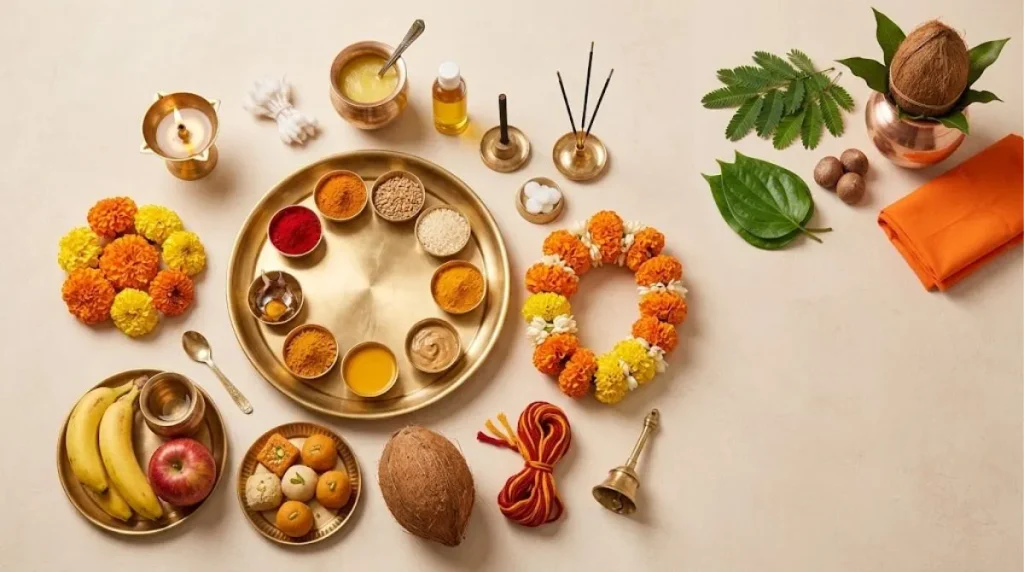
For first-time preparation, it helps to separate a simple home setup from items needed only for particular traditions.
| Simple Home Setup | Add Only If Your Tradition Uses It |
|---|---|
| Diya / Deepak | Shami leaves |
| Puja ghee or oil | Materials for Aparajita Puja |
| Cotton batti | Mauli / Kalawa |
| Kumkum / Roli | Coconut |
| Akshat | Betel leaves / Supari |
| Flowers | Kalash |
| Dhoop / Agarbatti | Special cloth |
| Water | Havan materials |
| Food for naivedya | Other priest-advised items |
| Puja thali | Ayudha/Saraswati-related items |
If your household follows a simple Vijayadashami puja, the first column may be sufficient.
How to Prepare Dussehra Puja Samagri Before Vijayadashami
A little advance preparation helps avoid rushing on the festival day.
2–3 Days Before
First check what you already have at home.
Review your supply of:
- Puja ghee or oil
- Cotton wicks
- Kumkum or roli
- Chandan
- Dhoop or agarbatti
- Kapoor
- Akshat
- Mauli, if used
Clean reusable items such as the diya, puja thali, bell, and small containers.
Non-perishable items can be purchased in advance. Fresh flowers, garlands, fruits, sweets, and other food offerings are better arranged closer to the festival.
If your family observes Shami Puja, Aparajita Puja, Ayudha Puja, or another regional tradition, confirm those requirements separately rather than assuming a generic list includes everything.
On the Day of Puja
Clean the home mandir or worship area and arrange the puja thali.
Keep fresh flowers and naivedya or other food for offering ready. Prepare the diya with a cotton wick, but light it only when the puja begins.
Keep any tradition-specific materials separately so they remain easy to identify during worship.
Dussehra Puja at Home: Simple Preparation Sequence
A home Dussehra puja does not have to be complicated.
A general preparation sequence may look like this:
- Clean and prepare the worship area.
- Arrange the existing home mandir setup or deity image/murti used by your household, if applicable.
- Place the puja samagri neatly in a clean thali.
- Prepare the diya with ghee or oil and a cotton wick.
- Arrange kumkum or roli, akshat, flowers, and water.
- Perform prayers and aarti according to your family tradition.
- Offer naivedya; after the offering, receive or distribute it as prasad according to your tradition.
- Perform any Shami, Aparajita, Ayudha, or other regional observance only when it is part of your tradition and appropriate festival calendar.
This is a preparation overview, not a universal Dussehra puja vidhi.
Shami Puja and Aparajita Puja on Vijayadashami
Shami Puja and Aparajita Puja are recognized Vijayadashami observances in some traditions, but neither should be treated as compulsory for every Dussehra celebration.
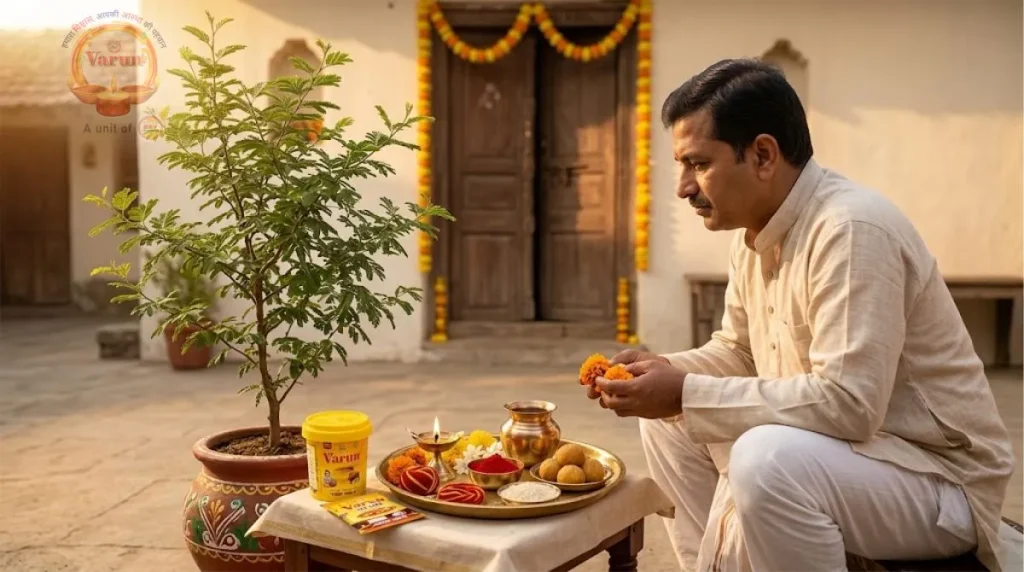
Shami Puja
Families who observe Shami Puja may worship a Shami tree or use Shami leaves according to local custom.
A simple preparation may include:
- Shami leaves or access to a Shami tree
- Kumkum or roli
- Akshat
- Flowers
- Diya
- Puja ghee or oil
- Cotton wick
- Naivedya
The exact ritual method varies, so follow your household tradition or knowledgeable religious guidance.
Aparajita Puja
Aparajita Puja refers to worship of Goddess Aparajita on Vijayadashami in traditions that observe it. It should not be reduced to buying an item simply called “Aparajita.”
If Aparajita Puja forms part of your family tradition, confirm its required samagri and method separately.
Ayudha Puja During the Navaratri–Dussehra Period
In several South Indian and regional traditions, Ayudha Puja is observed during the Navaratri–Dussehra period, commonly around Navami or Mahanavami, rather than being universally performed on Vijayadashami itself.
For example, the official Mysuru Dasara 2026 programme places Mahanavami and Ayudha Puja on October 20, followed by Vijayadashami on October 21.
Ayudha Puja may involve cleaning and respectfully worshipping:
- Tools
- Machinery
- Vehicles
- Work equipment
- Musical instruments
In Saraswati-related observances, books and instruments may also receive special attention. Practices vary considerably between communities.
A simple preparation may include diya, flowers, kumkum, dhoop, and naivedya, but the exact method should follow the relevant regional tradition.
Dussehra Puja Samagri for Shops, Workshops and Businesses
In regions and communities where Ayudha Puja or related occupational traditions are observed, shops, factories, offices, and workshops may also mark the Navaratri–Dussehra period with worship of tools, vehicles, machinery, or work equipment.
Commonly prepared puja items may include:
- Diya
- Cotton batti
- Puja ghee or oil
- Kumkum or roli
- Akshat
- Flowers or garland
- Dhoop
- Kapoor
- Food for naivedya
- Puja thali
This is a regional and cultural practice, not a compulsory all-India requirement for businesses.
Dussehra 2026 Date
For a general India calendar, Dussehra / Vijayadashami 2026 falls on Tuesday, October 20, 2026. Government of India holiday listings and the Ministry of Tourism’s Incredible India festival calendar both list Dussehra on October 20.
| Festival | General India Date |
|---|---|
| Dussehra / Vijayadashami 2026 | Tuesday, October 20, 2026 |
However, regional Panchangs and local observances can differ. For example, the official bihar Dasara 2026 programme schedules its Vijayadashami celebrations for Wednesday, October 21, 2026, with Mahanavami/Ayudha Puja on October 20.
Therefore, use October 20 as the general national date, but check your regional Panchang for the date, Vijay Muhurat, and any tradition-specific observance in your location.
This page uses an evergreen URL, so the date section should be genuinely reviewed and updated each year without creating a new URL solely for the year.
Dussehra Puja Samagri — What You May Not Need
One of the easiest mistakes is buying every item shown in a generic online checklist.
A simple household Dussehra celebration may not require:
- Full Panchamrit ingredients
- Kalash
- Havan Samagri
- Multiple ritual cloths
- Elaborate decorations
- Large quantities of puja ingredients
- Deity-specific offerings unrelated to your household worship
These items may be entirely appropriate when a particular ritual requires them. They are simply not automatically necessary for every family.
Start with the puja items your household normally uses and add only the Dussehra-specific materials required by your tradition.
For broader everyday preparation, see the Daily Puja Samagri List for Home.
VARUN Festival Puja Essentials
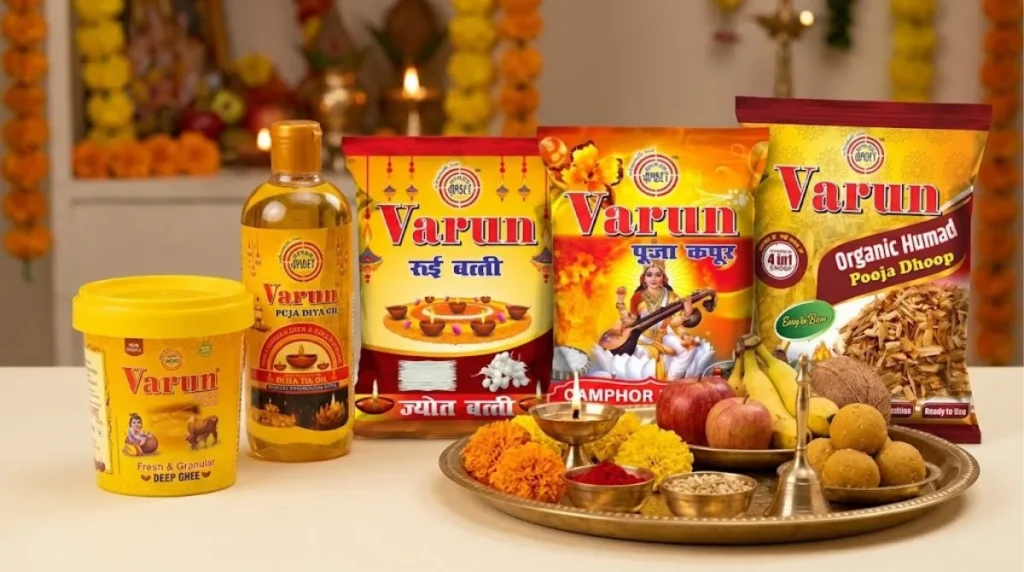
If your household already uses puja consumables such as ghee, oil, cotton wicks, dhoop, or camphor, it can be convenient to check those supplies before Dussehra.
SAV Products offers VARUN puja essentials such as:
Choose products according to the puja actually followed in your home rather than purchasing an unnecessarily large festival kit.
Common Mistakes When Preparing Dussehra Puja Samagri
Buying Everything From a Generic List
Different regions and families observe Vijayadashami differently. Confirm what your household actually needs before purchasing extra items.
Forgetting Diya Consumables
Many families already own a diya but discover at the last moment that the ghee, oil, or cotton batti has run out.
Check consumables a few days before the festival.
Buying Fresh Offerings Too Early
Flowers, garlands, fruits, sweets, and other food offerings should remain fresh. Arrange them close enough to the puja that they are still suitable for offering.
Treating Regional Traditions as Universal
Shami Puja, Aparajita Puja, and Ayudha Puja are important traditions, but they are not observed identically across India.
Confusing Naivedya and Prasad
Food is presented as naivedya during worship. After it has been offered, it may be received or distributed as prasad according to tradition.
Leaving Flames Unattended
Keep diya, dhoop, agarbatti, and kapoor away from combustible decorations and never leave open flames unattended.
Frequently Asked Questions
What puja samagri is needed for Dussehra at home?
A simple Dussehra puja may use diya, puja ghee or oil, cotton wick, kumkum or roli, akshat, flowers, dhoop or agarbatti, water, and naivedya. Additional items depend on family tradition.
Is Dussehra 2026 on October 20 or October 21?
October 20, 2026 is the general Dussehra/Vijayadashami date listed in national Government of India calendars. Regional observances can differ; Mysuru’s official 2026 Dasara programme observes Vijayadashami on October 21. Check your regional Panchang.
Is Shami leaf necessary for Dussehra Puja?
No. Shami Puja is important in some Vijayadashami traditions but is not a universal requirement for every household.
Is Aparajita a puja samagri item?
Aparajita Puja refers to worship of Goddess Aparajita in traditions that observe it. Do not assume that a generic item called “Aparajita” must be purchased; confirm the required samagri for your tradition.
Is Ayudha Puja performed on Vijayadashami?
The timing varies by regional tradition. In many South Indian observances it is associated with Navami or Mahanavami. In Mysuru’s official 2026 calendar, Ayudha Puja is on October 20 and Vijayadashami on October 21.
Can we use ghee or oil in the Dussehra diya?
Both are used in different household traditions. Follow the practice traditionally observed in your home.
Is havan samagri necessary for Dussehra?
Not for every household. Havan samagri is required only when a havan forms part of the ritual being performed.
Can Dussehra puja be performed simply at home?
Yes. A simple home puja can use a small set of regularly used items, adapted to your household tradition.
Final Dussehra Preparation Check
Before beginning the puja, confirm the basics:
- Puja space cleaned
- Diya ready
- Ghee or oil available
- Cotton batti ready
- Kumkum / roli and akshat ready
- Fresh flowers arranged
- Dhoop / kapoor ready, if used
- Water ready
- Naivedya ready
- Tradition-specific materials confirmed
That is usually more useful than trying to follow an oversized generic shopping list.
Final Thoughts
A useful Dussehra puja samagri list should simplify festival preparation.
Begin with the items your household actually uses—such as diya, ghee or oil, cotton batti, kumkum or roli, akshat, flowers, dhoop, water, and naivedya. Add Shami leaves, materials for Aparajita Puja, Ayudha Puja items, mauli, coconut, or other samagri only when they belong to your family or regional tradition.
For 2026, October 20 is the general India Vijayadashami date, but regional calendars can differ, so verify local timings before any time-specific ritual.
A simple, well-prepared puja is more useful than purchasing items your household does not need.