Daily Puja Samagri List for Home: सुबह और शाम की पूजा के लिए संपूर्ण सामग्री
A daily puja at home can be performed with a simple set of commonly used items such as a diya, puja ghee or oil, cotton wick, flowers, water, kumkum or roli, dhoop or agarbatti, and naivedya. Many families also keep chandan, akshat, kapoor, a bell, and a small puja thali ready for morning worship and evening aarti.
There is no single universal daily puja samagri list that applies to every Hindu household. Puja practices vary by deity, region, family tradition, sampradaya, and personal devotion. Some families follow a very simple routine, while others use a more detailed set of puja items.
This guide provides a practical puja samagri list for home, explains commonly used daily worship items, shows what to keep in a puja thali, and gives simple tips for morning puja, evening aarti, storage, safety, and beginner-friendly preparation.
Note: This article is a general household preparation guide. For deity-specific puja, vrat, festival puja, or detailed rituals, follow your family tradition or consult a knowledgeable priest.
Daily Puja Samagri List at a Glance
If you want a quick checklist, start with the table below. These are commonly used items for daily home worship, but not every household needs every item every day.
| Puja Item | Common Use | Typical Role |
|---|---|---|
| Diya / Deepak | Lighting during puja and aarti | Common daily item |
| Puja Ghee or Puja Oil | Used for lighting diya | Common daily item |
| Cotton Wick / Batti | Used inside diya | Common daily item |
| Kumkum / Roli | Tilak and puja use | Common in many homes |
| Akshat / Rice | Offering during puja | Useful / tradition-specific |
| Chandan | Tilak and devotional use | Useful / tradition-specific |
| Dhoop / Agarbatti | Fragrance and devotional atmosphere | Common in many homes |
| Kapoor / Camphor | Aarti, especially in some evening puja traditions | Tradition-specific |
| Flowers | Offering to deity | Common in many homes |
| Water / Jal | Offering and purification | Common daily item |
| Gangajal | Traditionally used in many homes | Tradition-specific |
| Naivedya | Food offering presented during puja | Common in many homes |
| Prasad | Offering received or shared after puja | Common in many homes |
| Puja Thali | Arranging puja items | Useful |
| Bell / Ghanti | Used during aarti | Tradition-specific |
| Mauli Dhaga | Used in sankalp or special puja | Ritual-specific |
| Kalash | Used in detailed rituals and festivals | Special occasion |
| Havan Samagri | Used for havan | Special occasion |
For daily worship, you do not need to buy every item used in Hindu rituals. A simple home puja can be performed with a clean space, sincere devotion, and the items your household actually uses.
Commonly Used Puja Items for Daily Worship
Daily puja becomes easier when regularly used items are kept clean and organized near the home mandir. The following items are commonly used in everyday worship.
Diya / Deepak
A diya, or deepak, is one of the most common items used in daily puja. It is typically lit during morning worship, evening aarti, and special religious occasions.
Families commonly use brass, clay, or small metal diyas. For everyday use, choose one that is stable, easy to clean, and suitable for the size of your mandir.
For safety, place the diya on a stable, heat-resistant surface. Keep it away from curtains, paper, plastic, loose cloth, children, and pets. Never leave a burning diya unattended.
Puja Ghee or Puja Oil
Puja ghee and puja oil are commonly used to light the diya. Some families prefer ghee, while others regularly use oil, especially for evening worship or longer diya lighting.
There is no need to treat one option as universally correct. The choice usually depends on household tradition, availability, and the type of puja being performed.
If you light a diya every day, keep a small regular-use container near the mandir and store the main bottle separately in a clean, safe place. Follow the storage instructions on the product label where provided.
Important: If a product is sold only for diya or ritual use, do not use it as a food offering or ingredient unless the packaging clearly states that it is suitable for human consumption.
Cotton Wick / Batti
A cotton wick, or batti, is placed inside the diya and absorbs the ghee or oil used for lighting.
Because cotton can absorb moisture easily, keep the wicks clean and dry. If you buy them in larger quantities, store them in a sealed container or clean packet away from water, oil, and dust.
Kumkum / Roli
Kumkum or roli is commonly used for tilak and other puja offerings. In many households, it is applied to the deity, puja items, or family members after worship.
Store kumkum in a small covered container and keep it away from water and oil so it remains dry and easy to use.
Akshat / Rice
Akshat generally refers to unbroken rice grains used during puja. Many households use akshat along with roli or kumkum as part of daily worship.
It is helpful to keep a small quantity of clean rice reserved exclusively for puja. Once rice has been kept for ritual use, avoid mixing it back with regular kitchen rice.
Chandan
Chandan, or sandalwood powder or paste, is used for tilak and devotional offerings in many Hindu households.
If you use sandalwood powder, store it in a dry container. If you prepare chandan paste, make only as much as you need for the puja.
Dhoop / Agarbatti
Dhoop and agarbatti are commonly used during morning and evening puja to create a devotional atmosphere.
Always place them in a proper holder and keep them away from curtains, paper, plastic, children, and anything that could catch fire. Use them in a reasonably ventilated space, especially in small rooms or around people sensitive to smoke.
Kapoor / Camphor
Kapoor is used during aarti in many homes, particularly during evening worship or on special occasions.
Camphor gradually sublimes when exposed to air, which means it can slowly disappear from an open container. Store it in a tightly closed container and keep it away from heat, flame, and children.
When burning camphor during aarti, use a proper holder and do not leave the flame unattended.
Flowers
Fresh flowers are commonly offered to deities as a mark of devotion. Some households use flowers every day, while others offer them whenever fresh flowers are available.
Whenever possible, use clean and fresh flowers. Avoid flowers that are stale, decaying, or moldy.
After puja, used flowers and other offerings should be handled respectfully according to family tradition. Where appropriate, flowers may be composted or disposed of responsibly. Avoid throwing puja waste into public water bodies unless local rules and tradition clearly allow it.
Water / Jal
Water is one of the simplest and most widely used puja items. It may be offered to the deity, kept in a small lota, or used for purification according to household practice.
Some families also keep Gangajal for worship. However, Gangajal is tradition-specific and should not be treated as compulsory for every daily puja.
Naivedya and Prasad
Naivedya is the food offering presented during puja. After the offering is made, it may be received or shared as prasad according to household tradition.
For daily puja, naivedya can be simple. Some families offer fruit, mishri, milk, dry fruits, or homemade food prepared according to their tradition. Food offerings may differ by deity, sampradaya, and household practice, so follow what is appropriate in your home.
Puja Thali Mein Kya-Kya Hona Chahiye?
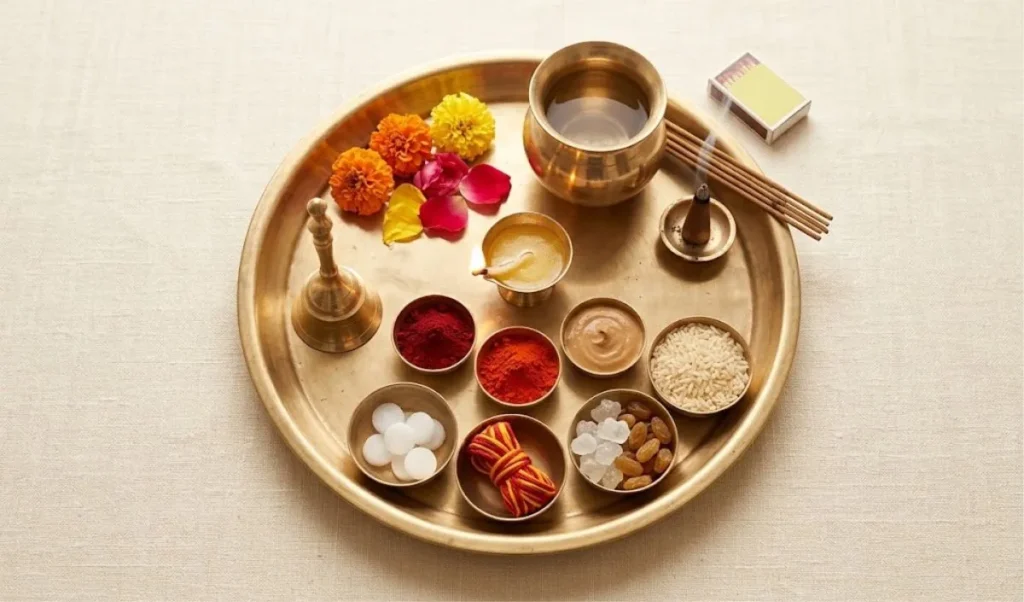
A puja thali helps keep everyday worship organized, especially if you perform morning puja and evening aarti regularly.
A simple puja thali may include:
- Diya
- Cotton wick
- Puja ghee or oil
- Kumkum or roli
- Chandan
- Akshat
- Flowers
- Dhoop or agarbatti
- Kapoor, if used in your home
- Small water container
- Naivedya
- Bell, if used in your home
Dry items such as kumkum, akshat, and chandan can remain in the thali in small containers. Fresh items such as flowers, water, and naivedya should be replaced regularly.
Morning Puja Samagri List – Daily Puja Samagri List for Home
Morning puja is usually simple and calm. For many families, it is a way to begin the day with cleanliness, prayer, and gratitude.
Simple Morning Puja Setup
A basic morning puja setup may include:
- Clean puja space
- Water or jal
- Fresh flowers
- Diya
- Cotton wick
- Puja ghee or oil
- Kumkum or chandan
- Dhoop or agarbatti
- Naivedya
A simple routine can be:
- Clean the puja area.
- Place fresh water and flowers.
- Light the diya safely.
- Offer kumkum, chandan, or akshat according to family tradition.
- Light dhoop or agarbatti in a safe and ventilated place.
- Offer naivedya.
- Recite your regular mantra, stotra, or prayer.
- After worship, receive or distribute prasad according to tradition.
This is only a general example. The order may differ in your household, and that is completely normal.
Evening Puja and Aarti Samagri List
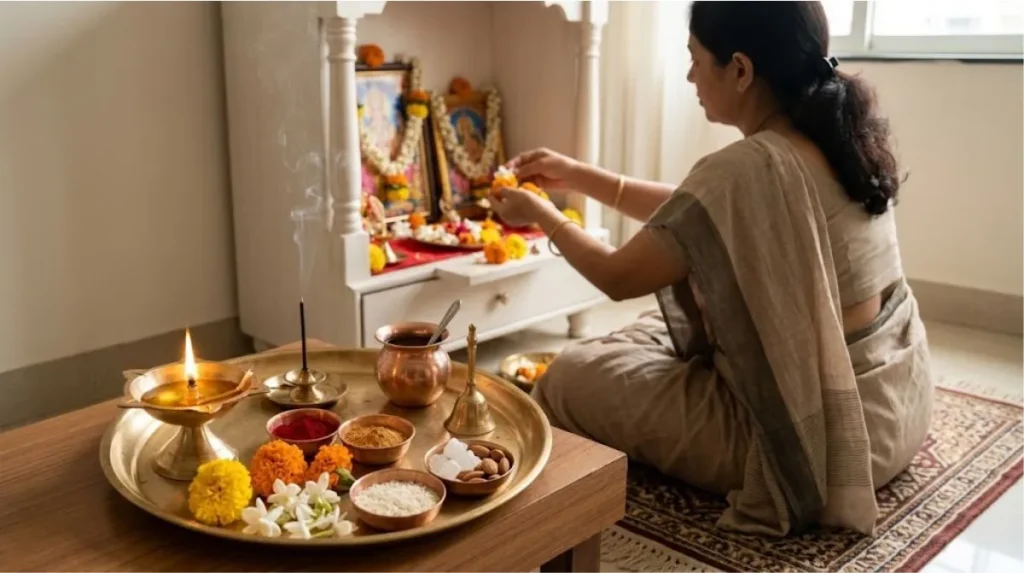
Evening puja often centers on lighting the diya and performing aarti. Many households follow a short worship routine in the evening or around dusk, according to family tradition.
Simple Evening Aarti Setup
For evening aarti, you may keep the following items ready:
- Diya or aarti lamp
- Cotton wick
- Puja ghee or oil
- Dhoop or agarbatti
- Kapoor, where traditionally used
- Aarti thali
- Bell, if used in your home
- Flowers
- Naivedya or prasad arrangement
A simple evening routine may include lighting the diya, offering fragrance, singing aarti, ringing the bell if that is part of your family practice, and sharing prasad afterward.
If you use camphor, burn it only in a suitable aarti holder and handle it carefully.
Simple, Common and Detailed Puja Setups
Beginners often assume they need to buy every puja item at once. In practice, it is better to start with a simple setup and add other items only when your household tradition requires them.
| Setup Type | Suitable For | Items Commonly Used |
|---|---|---|
| Simple Setup | Beginners or very short daily worship | Clean space, diya, wick, ghee or oil, water, flower or simple naivedya |
| Common Daily Setup | Regular morning/evening puja | Diya, wick, ghee or oil, kumkum/roli, akshat, flowers, water, dhoop/aggarbatti, naivedya |
| Detailed Setup | Festival, vrat, special puja or family tradition | Puja thali, bell, chandan, kapoor, mauli, kalash, coconut, deity-specific offerings, havan samagri if required |
This approach keeps daily worship practical and avoids unnecessary clutter. Special items can be kept separately for festivals, vrat, havan, or deity-specific puja.
Useful Puja Consumables to Keep Stocked
Some puja items are consumables, which means they need regular replenishment. Keeping these stocked makes it easier to maintain a consistent daily routine if your household uses them.
| Item | Check / Refill Tip |
|---|---|
| Puja Ghee or Oil | Refill before the bottle is empty |
| Cotton Wicks | Keep a clean, dry reserve |
| Dhoop / Agarbatti | Refill according to daily use |
| Camphor | Store airtight and check quantity |
| Kumkum / Roli | Keep sealed and dry |
| Chandan | Store away from moisture |
| Flowers | Use fresh whenever possible |
| Naivedya Items | Keep fresh and suitable for offering |
For daily puja, consumables usually matter more than decorative items. A beautifully decorated mandir is meaningful, but a smooth daily routine depends on having basic essentials available.
Check your stock periodically according to how often your household performs puja. A monthly check may work for some families, while others may need to refill items more often.
How to Store Puja Samagri Properly
Proper storage keeps puja items clean, usable, and easy to find. It also reduces waste.
Keep Dry Items Moisture-Free
Kumkum, chandan powder, akshat, cotton wicks, and hawan samagri should be stored away from moisture.
Use small containers, sealed pouches, or boxes with lids. Avoid keeping dry puja items next to wet flowers, open water containers, or oil bottles.
Store Ghee and Oil Carefully
Puja ghee and oil should be kept in clean, closed containers away from direct sunlight and excessive heat. Also follow the storage instructions on the product label where provided.
If convenient, transfer a small amount into a separate daily-use container. This keeps the main bottle clean and reduces spills near the mandir.
Keep Cotton Wicks Clean and Dry
Cotton wicks can absorb moisture quickly. Damp wicks may be difficult to light or may burn unevenly.
Store them in a dry packet or small box and avoid handling them with wet or oily hands.
Store Camphor in a Closed Container
Camphor gradually sublimes when exposed to air, so it should be kept in a closed box or airtight container.
Keep it away from heat, flame, and children.
Keep Fresh and Dry Offerings Separate
Fresh flowers, fruits, and naivedya should be stored separately from dry puja materials.
Keeping food offerings away from dhoop, camphor, oil, and kumkum helps prevent unwanted smells, stains, and moisture.
What to Do with Used Puja Samagri After Worship
Many families wonder what to do with flowers, akshat, water, and other offerings after puja. The answer may vary by household tradition, but the main idea is to handle used puja items respectfully.
General suggestions:
- Share edible prasad according to family tradition.
- Remove used flowers before they decay.
- Compost natural flowers where possible.
- Keep reusable items such as diya, bell, thali, and containers clean.
- Dispose of packaging responsibly.
- Follow local rules and avoid polluting public places or water bodies.
For specific rituals, festivals, or deity-related practices, follow your family tradition or priestly guidance.
What If You Do Not Have Every Puja Item?
A simple daily puja should not feel stressful. If you do not have every item, you can still pray with sincerity and use what is available according to your tradition.
For example:
| If This Item Is Not Available | Practical Approach |
|---|---|
| Fresh flowers | Offer clean water, prayer, or available suitable flowers according to tradition |
| Chandan | Use kumkum/roli if that is acceptable in your household practice |
| Kapoor | Perform aarti with diya if camphor is not part of your daily routine |
| Puja thali | Use a clean plate reserved for puja |
| Elaborate naivedya | Offer a simple fruit, mishri, or suitable food according to tradition |
| Bell | Continue puja without it if your household does not use one |
These are practical suggestions, not universal religious rules. For deity-specific worship or formal rituals, confirm the correct method with your family tradition or a knowledgeable priest.
Daily Puja Samagri Checklist for Beginners
If you are setting up a home mandir for the first time, this simple checklist can help. Save it on your phone or print it for reference.
- Diya / Deepak
- Cotton Wick / Batti
- Puja Ghee or Puja Oil
- Kumkum / Roli
- Chandan
- Akshat / Rice
- Flowers
- Dhoop / Agarbatti
- Kapoor / Camphor
- Water / Jal
- Naivedya
- Puja Thali
- Bell / Ghanti
- Matchbox or lighter
- Small cloth for cleaning the mandir
For one simple practical setup, even fewer items may be enough: a clean space, diya, wick, ghee or oil, water or flowers, and a sincere prayer.
Do Different Deities Need Different Puja Samagri?
Yes. Certain offerings may differ depending on the deity, region, sampradaya, and family tradition, although the basic items often remain similar: diya, flowers, water, fragrance, tilak items, and naivedya.
For example:
- Lord Shiva puja may include bel patra in many traditions.
- Vishnu or Krishna puja may include tulsi according to Vaishnava tradition.
- Lakshmi puja often includes diya, flowers, and sweets in many households.
- Durga puja may include red flowers and kumkum in some traditions.
- Hanuman puja may include sindoor in many regional practices.
- Ganesh puja may include durva and modak in some households.
These are common examples, not universal rules. For deity-specific worship, follow your family tradition or consult a knowledgeable priest.
You can also read related guides on Janmashtami Puja Samagri, Diwali Puja Samagri, Navratri Puja Samagri, and Ganesh Puja Samagri when you need more detailed festival- or deity-specific lists.
VARUN® Daily Puja Essentials
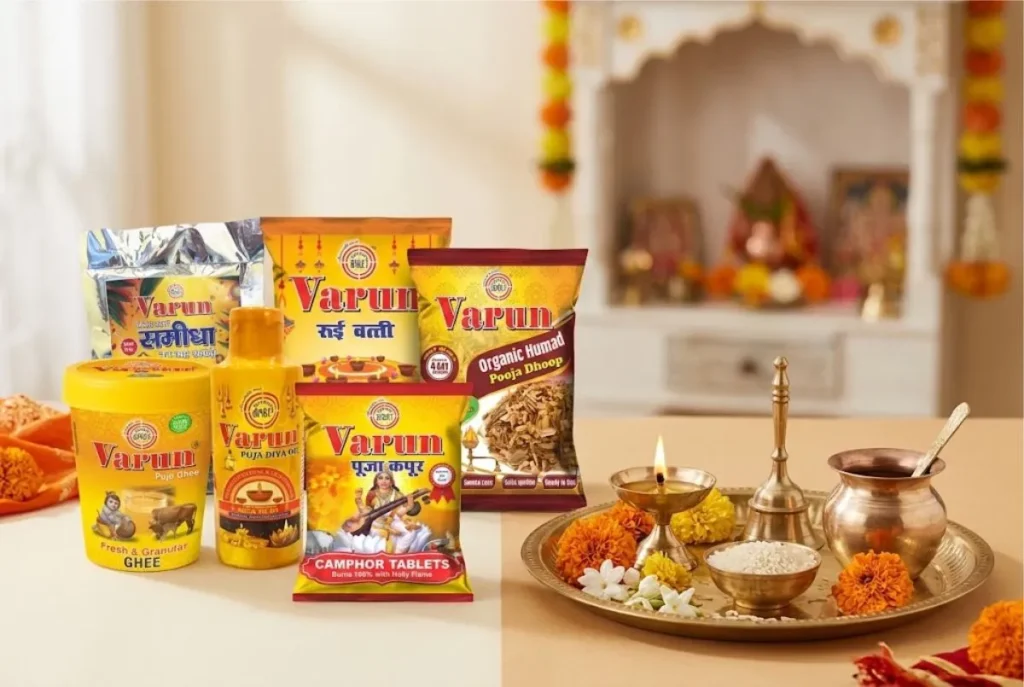
Families who prefer to keep commonly used daily puja items ready at home can choose products according to their actual routine and household tradition.
The VARUN® Pooja Products range includes regularly used items such as:
- Puja Ghee
- Puja Oil
- Cotton Wicks
- Humad Dhoop
- Camphor
- Kumkum
- Samidha Lakdi
- Mauli Dhaga
The aim should not be to buy more puja samagri than necessary. A better approach is to keep the items your family genuinely uses and replenish them as required.
For regular home worship, you can explore VARUN® Pooja Products by SAV Products and choose suitable items based on your daily puja routine.
Common Mistakes When Preparing Daily Puja Samagri
Daily puja should feel peaceful and manageable. A few simple habits can prevent unnecessary inconvenience.
Common mistakes include:
- Buying too many items that are rarely used
- Assuming every household must follow the same puja list
- Letting ghee, oil, or cotton wicks run out completely
- Storing cotton wicks in a damp place
- Leaving camphor uncovered
- Using stale flowers or old naivedya
- Keeping food offerings next to dhoop, kapoor, or oil
- Not cleaning the diya regularly
- Allowing the puja thali to become cluttered
- Treating tradition-specific items as compulsory for everyone
A clean, simple setup is often easier to maintain than an overcrowded one. Start with the items your family actually uses every day.
FAQs About Daily Puja Samagri
Daily puja ke liye kaun-kaun si samagri chahiye?
Daily puja ke liye commonly used samagri mein diya, cotton wick, puja ghee ya oil, flowers, water, kumkum ya roli, dhoop ya agarbatti, aur naivedya shamil ho sakte hain. Chandan, akshat, kapoor aur bell bhi kai gharon mein use kiye jaate hain.
Puja thali mein kya-kya hona chahiye?
Puja thali mein diya, batti, ghee ya oil, kumkum, chandan, akshat, flowers, dhoop, kapoor, water aur naivedya rakha ja sakta hai. Fresh items jaise flowers, water aur naivedya ko regularly replace karna chahiye.
Naivedya aur prasad mein kya difference hai?
Naivedya woh food offering hai jo puja ke dauran Bhagwan ko arpit kiya jata hai. Puja ke baad wahi offering prasad ke roop mein receive ya share ki ja sakti hai, according to family tradition.
Daily diya ke liye ghee ya oil kaun sa use karein?
Ghee aur oil dono ka use alag-alag household traditions mein hota hai. Jo aapke ghar ki parampara mein follow hota hai, wahi use karein. Safety aur cleanliness ka dhyan zaroor rakhein.
Subah ki puja ke liye kya samagri chahiye?
Subah ki puja ke liye water, flowers, diya, cotton wick, ghee ya oil, kumkum ya chandan, dhoop ya agarbatti aur naivedya ka simple setup kaafi ho sakta hai.
Shaam ki aarti ke liye kya-kya chahiye?
Shaam ki aarti ke liye diya, cotton wick, puja ghee ya oil, dhoop, kapoor, aarti thali, bell, flowers aur naivedya ya prasad arrangement use kiya ja sakta hai.
Kya har din kapoor jalana zaroori hai?
Nahi. Har ghar mein daily kapoor jalane ki parampara nahi hoti. Kuch families evening aarti mein kapoor use karti hain, jabki kuch ise sirf special puja ya festivals mein use karti hain.
Puja samagri ko ghar mein kaise store karein?
Dry items ko moisture-free containers mein rakhein. Cotton wicks ko dry rakhein, camphor ko closed container mein store karein, aur fresh offerings ko dhoop, oil aur kapoor se alag rakhein.
Daily puja ke liye minimum samagri kya hai?
A simple daily puja may include a clean puja space, diya, wick, ghee or oil, water or flowers, and sincere prayer. The exact list can vary according to household tradition.
Puja samagri kitni baar replace ya refill karni chahiye?
Consumable items jaise puja ghee, oil, cotton wicks, dhoop, camphor, kumkum aur chandan ko usage ke according check karna chahiye. Fresh flowers aur food offerings ko fresh rakhna better hai.
Conclusion
A practical daily puja routine does not require a long or complicated list of items. For most homes, commonly used puja samagri includes diya, ghee or oil, cotton wick, flowers, water, kumkum or roli, dhoop, and naivedya.
Items such as chandan, akshat, kapoor, bell, puja thali, and mauli can be added according to family tradition and actual need.
The best approach is simple: keep daily essentials ready, store them properly, refill consumables before they run out, and avoid buying items your household does not use.
If you are setting up a home mandir for the first time, begin with a small and manageable setup. Over time, you can add items according to your family’s deity worship, festivals, and established traditions.
A clean puja space, sincere prayer, and thoughtfully prepared samagri are usually enough to make daily worship organized, peaceful, and meaningful.