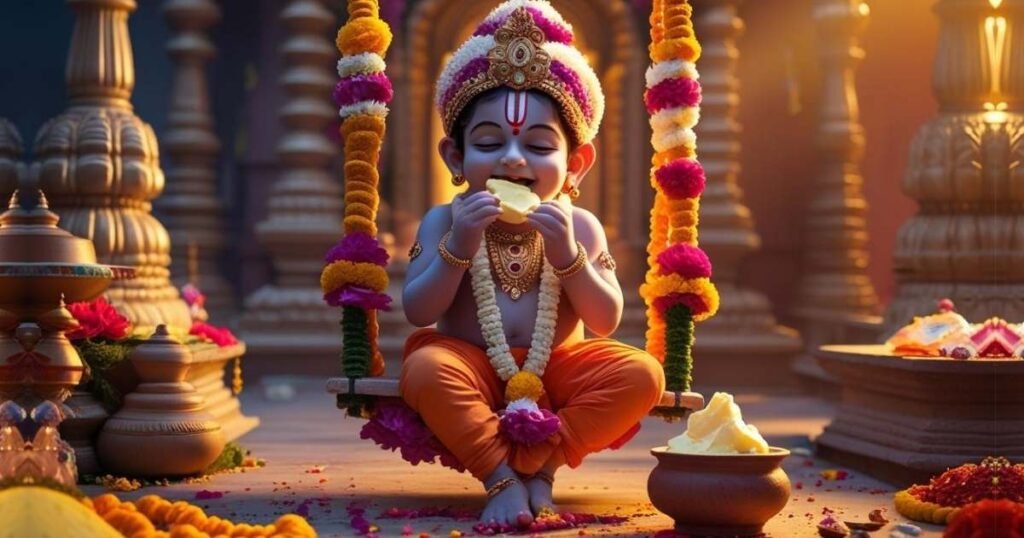
Krishna Janmashtami 2026 Kab Hai? जानें तिथि, शुभ मुहूर्त, पूजा विधि, व्रत और संपूर्ण जानकारी कृष्ण जन्माष्टमी 2026 शुक्रवार, 4 सितंबर 2026 को मनाई जाएगी। यह पावन पर्व भगवान श्रीकृष्ण के जन्मोत्सव के रूप में मनाया जाता है। हिंदू पंचांग के अनुसार जन्माष्टमी भाद्रपद मास के कृष्ण पक्ष की अष्टमी तिथि को आती है। इसी दिन भक्त भगवान श्रीकृष्ण के बाल स्वरूप लड्डू गोपाल की पूजा करते हैं, व्रत रखते हैं, मध्यरात्रि में जन्मोत्सव मनाते हैं और माखन-मिश्री, पंचामृत, पंजीरी तथा अन्य भोग अर्पित करते हैं। Krishna Janmashtami 2026 का पर्व भक्तों के लिए भक्ति, प्रेम, धर्म और आनंद का विशेष अवसर है। भारत के अलग-अलग क्षेत्रों में इसे जन्माष्टमी, गोकुलाष्टमी, श्रीकृष्ण जयंती और कृष्ण जन्मोत्सव जैसे नामों से भी जाना जाता है। इस लेख में आप जानेंगे जन्माष्टमी 2026 की तिथि, अष्टमी तिथि, रोहिणी नक्षत्र, निशिता पूजा मुहूर्त, व्रत विधि, पारण, पूजा सामग्री, घर पर पूजा विधि, श्री कृष्ण जन्म कथा, भोग, 56 भोग की परंपरा, घर में उत्सव मनाने के तरीके और जरूरी FAQs। Krishna Janmashtami 2026 Kab Hai? कृष्ण जन्माष्टमी 2026 शुक्रवार, 4 सितंबर 2026 को मनाई जाएगी। दही हांडी का उत्सव सामान्य रूप से अगले दिन, शनिवार, 5 सितंबर 2026 को मनाया जाएगा। नीचे दी गई जानकारी New Delhi/IST आधारित Panchang timing के अनुसार है। पूजा मुहूर्त, अष्टमी तिथि और रोहिणी नक्षत्र का समय स्थान के अनुसार बदल सकता है, इसलिए अंतिम पूजा समय अपने शहर के स्थानीय पंचांग से अवश्य जांचें। जानकारी विवरण कृष्ण जन्माष्टमी शुक्रवार, 4 सितंबर 2026 अष्टमी तिथि प्रारंभ 4 सितंबर 2026, लगभग 2:25 AM अष्टमी तिथि समाप्त 5 सितंबर 2026, लगभग 12:13 AM रोहिणी नक्षत्र प्रारंभ 4 सितंबर 2026, लगभग 12:29 AM रोहिणी नक्षत्र समाप्त 4 सितंबर 2026, लगभग 11:04 PM निशिता पूजा लगभग 11:57 PM से 12:43 AM, New Delhi/IST दही हांडी शनिवार, 5 सितंबर 2026 जन्माष्टमी की पूजा सामान्य रूप से निशिता काल यानी मध्यरात्रि के आसपास की जाती है, क्योंकि धार्मिक मान्यता के अनुसार भगवान श्रीकृष्ण का जन्म मध्यरात्रि में हुआ था। हालांकि, व्रत और पारण की परंपरा परिवार, संप्रदाय और क्षेत्र के अनुसार अलग-अलग हो सकती है। जन्माष्टमी क्यों मनाई जाती है? जन्माष्टमी भगवान श्रीकृष्ण के जन्मोत्सव के रूप में मनाई जाती है। भगवान श्रीकृष्ण को भगवान विष्णु का आठवां अवतार माना जाता है। उनका जन्म मथुरा में राजा कंस के कारागार में माता देवकी और पिता वसुदेव के घर हुआ था। कंस को भविष्यवाणी मिली थी कि देवकी की आठवीं संतान उसका वध करेगी। इसी भय से उसने देवकी और वसुदेव को कारागार में बंद कर दिया। भगवान श्रीकृष्ण का जन्म उसी कारागार में हुआ। जन्म के बाद वसुदेव जी ने बाल कृष्ण को यमुना पार कर गोकुल पहुंचाया, जहां नंद बाबा और माता यशोदा ने उनका पालन-पोषण किया। जन्माष्टमी केवल जन्मोत्सव नहीं है, बल्कि यह धर्म की रक्षा, अधर्म के विनाश और भक्ति की शक्ति का प्रतीक भी है। इस दिन भक्त भगवान श्रीकृष्ण के बाल रूप की पूजा करते हैं, मंदिर सजाते हैं, व्रत रखते हैं, भजन-कीर्तन करते हैं और मध्यरात्रि में कृष्ण जन्म का उत्सव मनाते हैं। Krishna Janmashtami 2026 का धार्मिक महत्व कृष्ण जन्माष्टमी का धार्मिक महत्व बहुत गहरा है। भगवान श्रीकृष्ण का जीवन धर्म, प्रेम, करुणा, नीति, ज्ञान और भक्ति का अद्भुत संदेश देता है। उन्होंने अपने जीवन से यह सिखाया कि जब-जब अधर्म बढ़ता है, तब धर्म की रक्षा के लिए ईश्वर किसी न किसी रूप में अवतरित होते हैं। भगवान श्रीकृष्ण का जन्म अंधकार, अत्याचार और भय के वातावरण में हुआ, लेकिन उनका जीवन प्रेम, आनंद और धर्म की स्थापना का प्रतीक बन गया। इसलिए जन्माष्टमी भक्तों को यह याद दिलाती है कि कठिन परिस्थितियों में भी विश्वास, धैर्य और धर्म का मार्ग नहीं छोड़ना चाहिए। भगवद गीता में श्रीकृष्ण ने कर्म, भक्ति और ज्ञान का जो संदेश दिया, वह आज भी जीवन का मार्गदर्शन करता है। जन्माष्टमी के दिन भक्त भगवान श्रीकृष्ण से प्रार्थना करते हैं कि उनके जीवन में धर्म, सद्बुद्धि, प्रेम, शांति और भक्ति बनी रहे। यह पर्व भक्ति और समर्पण का भी प्रतीक है। भक्त मानते हैं कि सच्चे मन से भगवान श्रीकृष्ण का नाम लेने, पूजा करने और सेवा भाव रखने से जीवन में सकारात्मकता आती है। Janmashtami 2026 Vrat – व्रत कैसे रखें? जन्माष्टमी व्रत भक्त श्रद्धा और भक्ति के साथ रखते हैं। कुछ लोग निर्जला व्रत रखते हैं, कुछ फलाहार करते हैं, जबकि कुछ लोग केवल सात्त्विक भोजन या दूध-फल लेते हैं। व्रत की परंपरा परिवार, क्षेत्र और संप्रदाय के अनुसार अलग-अलग हो सकती है। व्रत से पहले क्या करें? व्रत से एक दिन पहले घर और पूजा स्थान की सफाई करें। पूजा सामग्री, फल, पंचामृत सामग्री, माखन-मिश्री, फूल, तुलसी दल, धूप, दीप और प्रसाद की तैयारी कर लें। यदि घर में लड्डू गोपाल हैं, तो उनके वस्त्र, झूला और श्रृंगार सामग्री भी पहले से तैयार रखें। व्रत के दिन सुबह स्नान करके स्वच्छ वस्त्र धारण करें और भगवान श्रीकृष्ण का स्मरण करते हुए व्रत का संकल्प लें। जन्माष्टमी के दिन क्या खा सकते हैं? जन्माष्टमी व्रत में कई परिवार फलाहारी भोजन करते हैं। सामान्य रूप से फल, दूध, दही, मखाना, सिंघाड़े का आटा, कुट्टू का आटा, साबूदाना, नारियल, मेवे और फलाहारी मिठाइयां ली जाती हैं। कुछ परिवार पूरे दिन केवल फल और दूध लेते हैं, जबकि कुछ लोग मध्यरात्रि पूजा के बाद प्रसाद ग्रहण करते हैं। अपनी पारिवारिक परंपरा और स्वास्थ्य के अनुसार व्रत रखें। व्रत में किन चीजों से बचें? व्रत में सामान्य रूप से अनाज, प्याज, लहसुन, मांसाहार, मदिरा और तामसिक भोजन से बचा जाता है। साथ ही क्रोध, झूठ, नकारात्मकता और अपवित्र विचारों से भी बचना चाहिए। यदि कोई व्यक्ति बीमार है, गर्भवती है, बुजुर्ग है या दवा ले रहा है, तो उसे अपनी स्वास्थ्य स्थिति के अनुसार व्रत रखना चाहिए। जन्माष्टमी व्रत कब खोलें? जन्माष्टमी व्रत का पारण कई परंपराओं में अगले दिन किया जाता है, जब अष्टमी तिथि और रोहिणी नक्षत्र समाप्त हो जाते हैं। कुछ परिवार मध्यरात्रि पूजा और जन्मोत्सव के बाद प्रसाद ग्रहण करते हैं। क्योंकि पारण का समय स्थान और परंपरा के अनुसार बदल सकता है, इसलिए अपने स्थानीय पंचांग या परिवार की परंपरा के अनुसार व्रत खोलना उचित है। जन्माष्टमी पूजा सामग्री की संपूर्ण सूची जन्माष्टमी पूजा की तैयारी सही तरीके